Custom Machining Services in Ontario, Canada
Precision Custom CNC Machining for Prototypes, Complex Parts, and Production
Finding reliable Custom Machining Services in Ontario, Canada is essential when your project requires accurate dimensions, repeatable quality, complex geometries, and dependable production. Whether you need a single prototype, replacement component, small batch, or production-ready parts, custom machining gives you the flexibility to manufacture components according to your exact specifications.
At Polymach365, we provide digital manufacturing solutions for manufacturers, engineers, product developers, and businesses throughout Ontario and across Canada. Our capabilities include CNC milling, CNC turning, 3-axis, 4-axis and 5-axis machining, prototype manufacturing, low-volume production, custom CNC parts, mold components, and production machining. Polymach365’s current platform supports CAD uploads, instant quoting, and CNC production, with a listed 100+ material range and a 4-day lead-time target.
Ontario has a broad CNC manufacturing ecosystem serving automotive, aerospace, industrial, medical, automation, energy, tooling, and other industries. Regional machining providers offer combinations of CNC milling, turning, prototyping, production machining, and quality inspection.
Therefore, choosing the right machining partner involves more than comparing prices. You should also consider machining capabilities, material options, engineering support, quality control, production capacity, and delivery requirements.
What Are Custom Machining Services?
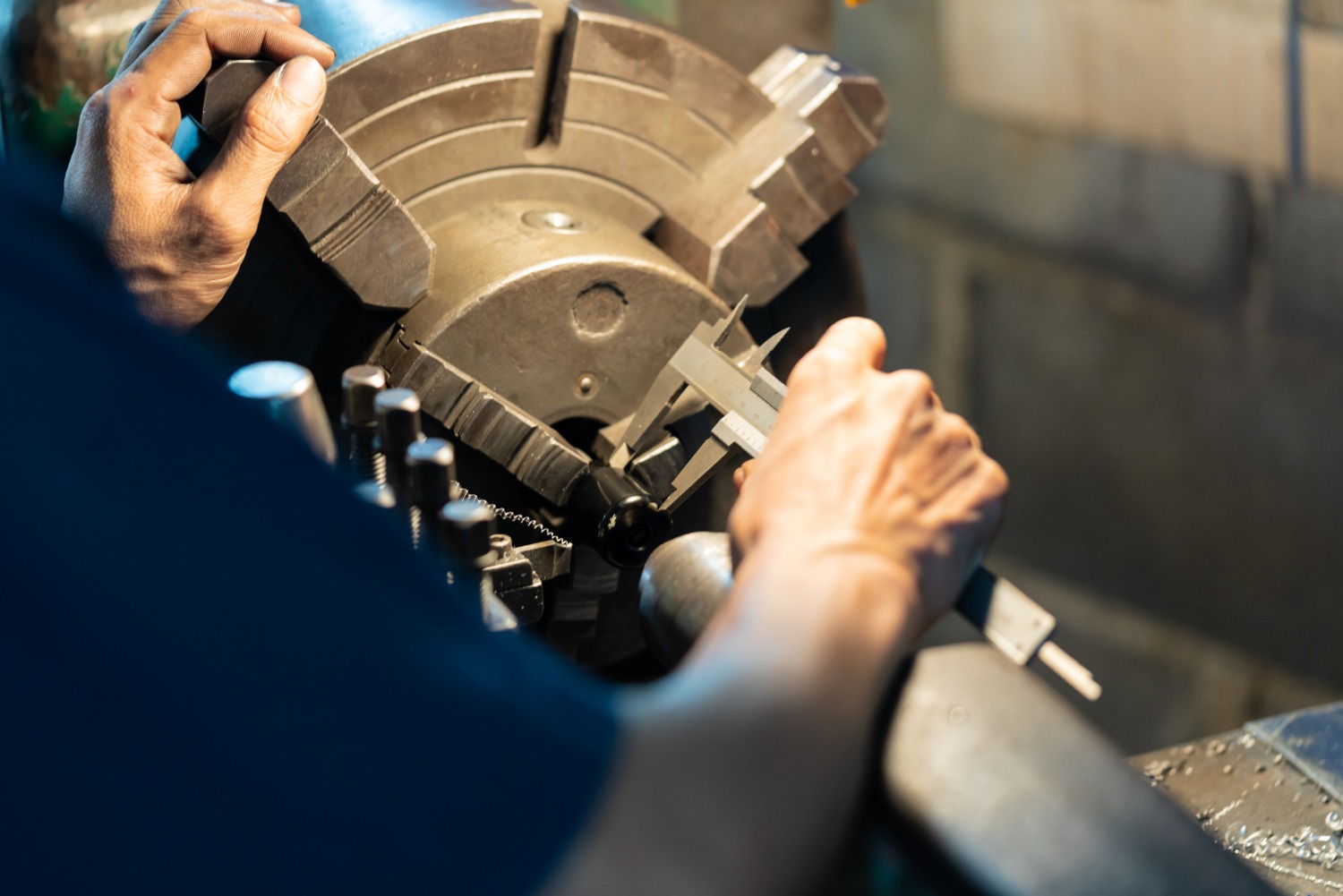
Custom machining involves manufacturing components according to specific engineering drawings, CAD models, dimensions, tolerances, materials, and application requirements.
Unlike standard off-the-shelf components, custom machined parts are created specifically for your project. Therefore, you can achieve the geometry and functionality your application requires.
CNC machining uses computer-controlled equipment to remove material from a metal or plastic workpiece. The machine follows programmed toolpaths generated from digital designs, allowing manufacturers to create repeatable and complex components.
As a result, custom machining is suitable for both prototype development and production manufacturing. CNC machining is commonly used for one-off components, prototypes, custom parts, and production quantities
Custom CNC Machining Services in Canada
At Polymach365, we combine digital manufacturing with CNC machining to support different project requirements.
Our custom machining capabilities include:
- CNC Milling
- CNC Turning
- 3-Axis CNC Machining
- 4-Axis CNC Machining
- 5-Axis CNC Machining
- Prototype Machining
- Low-Volume Production
- Custom CNC Parts
- Production Machining
- Mold Components
- Complex Machined Components
Moreover, our online manufacturing approach allows customers to begin with their CAD design rather than starting with lengthy manual processes.
Therefore, you can move from CAD file → manufacturing review → CNC machining → finished component through a streamlined workflow.
CNC Milling for Custom Parts
CNC milling uses rotating cutting tools to remove material from a workpiece. Therefore, it is ideal for components requiring pockets, slots, holes, contours, flat surfaces, and complex profiles.
Our CNC Milling Applications
- Precision brackets
- Machine components
- Housings
- Fixtures
- Mounting plates
- Mold components
- Custom tooling
- Mechanical components
Furthermore, multi-axis milling provides greater flexibility when components contain features across multiple surfaces.
As a result, CNC milling can produce both simple and highly complex custom components from digital designs.
CNC Turning for Custom Components
CNC turning rotates the workpiece while cutting tools remove material to create cylindrical components.
Therefore, custom CNC turning is particularly suitable for:
- Shafts
- Pins
- Bushings
- Sleeves
- Rollers
- Couplings
- Spacers
- Threaded components
- Cylindrical parts
Moreover, turning can provide consistent diameters, concentricity, and repeatable dimensions.
Consequently, manufacturers can produce reliable rotational components for industrial machinery, automation, tooling, automotive applications, and other equipment.
5-Axis Custom CNC Machining
Some components require machining from several directions. Therefore, 5-axis CNC machining in Ontario can provide greater flexibility for complex geometries and difficult-to-access features.
It can be useful for components with:
- Complex contours
- Angled surfaces
- Deep cavities
- Multi-sided features
- Organic geometries
- Precision tooling features
Ontario machining companies currently offer multi-axis CNC machining alongside milling, turning, and prototype production.
As a result, selecting the appropriate machining process can reduce unnecessary setups and improve manufacturing efficiency.
Custom Machining for Prototypes
Product development often starts with a prototype.
However, engineers need prototypes that accurately represent the final component so they can test fit, function, dimensions, assembly, and performance.
Therefore, custom CNC machining provides a practical way to manufacture functional prototypes directly from CAD models.
Typical Prototype Workflow
CAD Design → DFM Review → Prototype → Testing → Design Improvements → Production
Moreover, CNC machining allows manufacturers to produce prototypes from many production-grade metals and engineering plastics.
As a result, you can identify design issues earlier and improve the component before increasing production quantities.
Custom Machining for Low-Volume Production
Not every project requires thousands of parts.
Startups, engineers, product developers, and established manufacturers often require small quantities for testing, validation, replacement parts, or specialized applications.
Therefore, custom machining can support:
- One-off components
- Small batches
- Low-volume production
- Short production runs
- Replacement parts
- Product validation
- Engineering changes
- Specialized components
Furthermore, CNC machining provides flexibility when designs change during development.
As a result, you can produce the quantity required without committing immediately to dedicated high-volume tooling.
Custom CNC Machining for Production Parts
Once a design has been validated, manufacturers may need to increase production.
Therefore, a capable custom machining partner should support your project beyond prototyping.
Production machining focuses on:
- Repeatability
- Dimensional consistency
- Process control
- Material consistency
- Quality inspection
- Production efficiency
- Scalable manufacturing
Moreover, digital manufacturing platforms can connect prototype development with production manufacturing, allowing projects to progress from early iterations toward end-use parts.
Consequently, selecting a machining partner that supports multiple production stages can simplify your manufacturing process.
Materials for Custom Machining
Material selection directly affects the performance, weight, durability, cost, and manufacturability of your component.
At Polymach365, our website highlights access to 100+ materials, including metals, plastics, composites, and high-temperature polymers.
Metal Materials
- Aluminum
- Stainless Steel
- Carbon Steel
- Tool Steel
- Brass
- Copper
- Titanium
- Alloy Steel
Engineering Plastics
- ABS
- Nylon
- Delrin
- Polycarbonate
- PEEK
- PTFE
For example, aluminum is widely used because of its low density and good machinability, while stainless steel can provide strength and corrosion resistance.
Therefore, material selection should consider the component’s strength, temperature, corrosion, wear, weight, and operating environment.
Choosing a machining company involves more than comparing prices.
You need a manufacturing partner that understands CAD designs, materials, machining processes, tolerances, production quantities, and application requirements.
Digital Manufacturing Workflow
Polymach365 provides a streamlined process designed to reduce unnecessary steps between design and production.
1. Upload Your CAD File
Submit your 3D CAD model using supported formats such as STEP, STL, IGES, SLDPRT, or ZIP.
2. Receive a Quote
Review the manufacturing requirements and project pricing before production.
3. Manufacturing Review
Your component can be evaluated for its machining requirements and production feasibility.
4. Precision CNC Machining
The approved design moves into CNC milling, turning, or another appropriate machining process.
5. Quality Inspection
Finished components are checked according to the applicable project requirements.
6. Production and Delivery
Once manufacturing is complete, your finished components are prepared for delivery.
Therefore, the process provides a clear path from your digital design to a physical component.
Benefits of Custom Machining Services in Ontario
Why do manufacturers choose custom machining instead of standard components?
Design Flexibility
You can manufacture components according to your exact CAD design.
Consistent Production
CNC automation supports repeatable machining operations.
Prototype-Friendly
You can manufacture functional prototypes before full-scale production.
Material Flexibility
Choose materials according to your component’s application and performance requirements.
Production Scalability
Move from one-off components to small batches and larger production quantities.
Complex Geometry
Multi-axis CNC machining can support challenging component designs.
Reduced Development Time
Digital manufacturing can shorten the path from design to physical prototype.
As a result, custom machining can support the entire product development cycle.
our manufacturing project starts with a design.
Therefore, the next step is simple: prepare your CAD file and provide the required material, quantity, tolerances, and finishing specifications.
Polymach365 can transform your digital design into a production-ready component through CNC milling, CNC turning, 5-axis machining, prototype manufacturing, low-volume production, and custom CNC machining.
Whether you need one custom part, a prototype, a small batch, or a larger production order, our digital manufacturing approach is designed to simplify the process.