High Precision Machining Services in London, Ontario, Canada
Advanced CNC Machining for Tight-Tolerance, Complex and Production-Ready Components
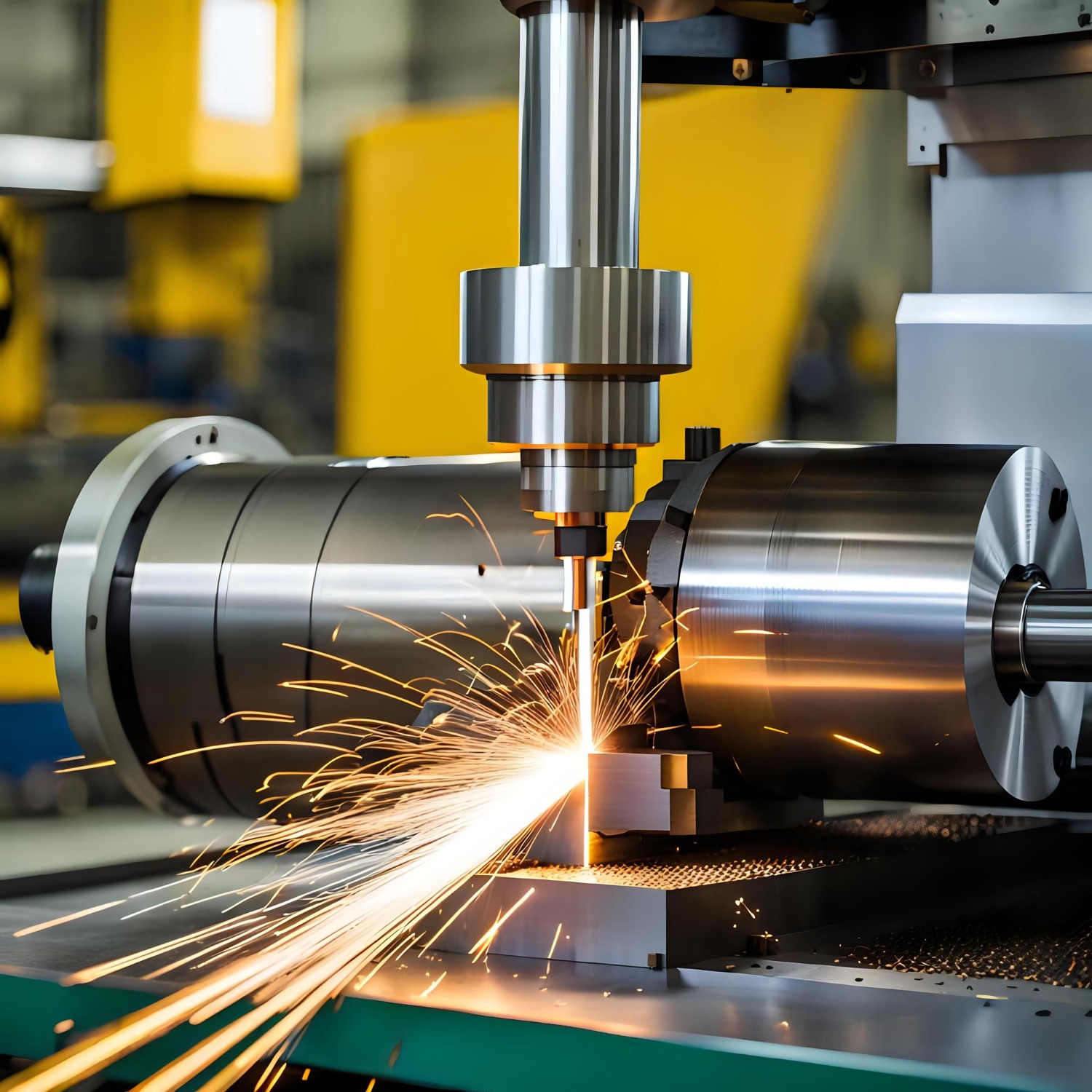
High Precision Machining Services in London, Ontario, Canada
Manufacturers depend on precision components to maintain product quality, assembly accuracy, equipment reliability, and consistent production. Therefore, businesses searching for High Precision Machining Services in London Ontario Canada need a machining partner that can support demanding engineering requirements from prototype development through production.
Polymach365 provides precision CNC machining solutions for manufacturers, engineers, OEMs, mold makers, automation companies, and product developers. In fact, Polymach365 already provides custom CNC machining solutions targeted to London, including CNC milling, turning, 5-axis machining, rapid prototyping, and low-volume production.
Whether you require precision milled parts, CNC turned components, custom machine parts, mold components, prototypes, replacement parts, or low-volume production, our machining solutions can support your project requirements.
Moreover, London has an established precision-machining market serving automotive, healthcare, energy, industrial equipment, and other manufacturing applications. Therefore, high-precision CNC machining remains highly relevant to manufacturers throughout London and Southwestern Ontario.
Why Choose Polymach365 for High Precision Machining in London?
London already has established CNC machine shops offering prototype and production machining, precision manufacturing, milling, turning, and specialized industrial machining.
Therefore, Polymach365 should differentiate its service through a broader prototype-to-production manufacturing approach, combined with multi-axis machining, mold-component expertise, engineering support, and custom manufacturing.
Tight-Tolerance CNC Machining
Critical components frequently contain dimensions that directly influence fit, movement, alignment, sealing, or assembly.
Therefore, our machining process focuses on controlling critical component features according to customer drawings and specifications.
Depending on the part geometry, material, feature size, and manufacturing process, Polymach365 reports capabilities down to ±5 micrometres for suitable high-precision applications.
Consequently, engineers can discuss tolerance requirements early instead of discovering manufacturing limitations after production begins.
Precision matters for the first component. However, repeatability matters for every component that follows.
Therefore, CNC programming and controlled machining processes help maintain consistency throughout repeat-production requirements.
This approach can help manufacturers achieve:
- Consistent component dimensions
- Reliable mating features
- Repeatable hole locations
- Controlled profiles
- Consistent assembly
Reduced variation between components
As a result, repeatability becomes an important advantage when moving from prototypes toward production.
What Are High Precision Machining Services?
High precision machining is the controlled manufacturing of components to demanding dimensional, geometric, and surface requirements.
Unlike general machining, precision manufacturing places greater emphasis on tolerances, repeatability, dimensional relationships, surface finish, tool control, machine stability, and inspection.
Therefore, the process is particularly valuable for components where small dimensional variations can affect assembly or performance.
Typical high-precision machining applications include:
- Precision shafts and bushings
- Complex CNC components
- Mold inserts and core components
- Machine and automation parts
- Fixtures and tooling
- Precision housings
- Medical-device components
- Aerospace components
- Automotive parts
- Prototype components
- Custom replacement parts
As a result, high precision machining supports industries where dimensional consistency and component reliability matter.
Advanced CNC Milling Services
CNC milling uses computer-controlled rotating cutting tools to remove material from a secured workpiece.
Therefore, it provides considerable flexibility for manufacturing components with pockets, holes, contours, slots, complex surfaces, and multi-sided features.
Polymach365 supports 3-axis, 4-axis, and 5-axis CNC machining, giving customers different manufacturing options based on component complexity.
🔩 3-Axis CNC Milling
3-axis machining works efficiently for many conventional component geometries.
Typical applications include:
- Pockets
- Slots
- Holes
- Flat surfaces
- Profiles
- Mounting features
Therefore, manufacturers can use 3-axis machining when component geometry does not require more complex axis movement.
⚙️ 4-Axis CNC Milling
4-axis machining adds rotational movement to increase manufacturing flexibility.
Consequently, manufacturers can access additional component surfaces while reducing repeated manual repositioning.
This approach can improve productivity for parts that require features around multiple sides.
🔧 5-Axis CNC Milling
Complex components may contain angled features, curved surfaces, deep cavities, or geometry that is difficult to access through conventional machining.
Therefore, 5-axis machining provides greater freedom for producing sophisticated parts.
It can support:
- Multi-sided components
- Complex contours
- Mold components
- Angled features
- Precision tooling
- Complex industrial components
- Intricate surfaces
Furthermore, completing more features with fewer setups can reduce repositioning and help maintain dimensional relationships.
As a result, 5-axis CNC machining becomes particularly valuable for demanding precision components.
High Precision CNC Turning
Not every precision component requires milling.
CNC turning provides an efficient manufacturing solution for cylindrical and rotational components.
Polymach365 can support turning requirements involving:
- Precision shafts
- Pins
- Bushings
- Sleeves
- Rollers
- Spacers
- Couplings
- Fittings
- Threaded components
- Custom cylindrical parts
Therefore, customers can specify important characteristics such as diameter, length, threads, grooves, bores, and mating features.
Moreover, CNC control supports consistent production when multiple identical turned components are required.
CNC Turn-Mill Machining
Complex components frequently combine cylindrical geometry with milled features.
For example, a shaft may require accurate turning while also containing flats, holes, keyways, slots, or other secondary geometry.
Therefore, combining turning and milling can streamline manufacturing.
Key advantages can include:
Fewer Setups: Multiple operations can be completed through a more integrated workflow.
Reduced Handling: Less repositioning can reduce unnecessary setup variation.
Improved Efficiency: Manufacturers can complete complex components through fewer separate processes.
Better Feature Relationships: Machining critical features through controlled setups can support dimensional consistency.
Complex Component Capability: Parts can contain both rotational and non-rotational geometry.
Consequently, turn-mill machining provides a practical solution for many complex precision components.
High Precision Machining from CAD Files
Every precision machining project begins with accurate engineering information.
Customers can submit:
- 3D CAD models
- 2D manufacturing drawings
- Material specifications
- Critical dimensions
- Dimensional tolerances
- Geometric tolerances
- Thread specifications
- Surface-finish requirements
- Required quantities
- Application requirements
Next, the component can be reviewed from a manufacturability perspective.
Therefore, potential machining challenges can be considered before production begins.
Materials for High Precision Machining
Material selection affects machining strategy, dimensional stability, tool wear, surface quality, cost, and final component performance.
Polymach365’s published machining content identifies support for a broad selection of metals and engineering plastics.
Metals
- Aluminum
- Stainless steel
- Carbon steel
- Tool steel
- Brass
- Copper
- Titanium
- High-performance alloys
- ABS
- Nylon
- Delrin (Acetal)
- Polycarbonate
- PEEK
- PTFE (Teflon)
Why Choose Polymach365 for High Precision Machining Services?
Polymach365 combines precision CNC machining, CNC milling, CNC turning, 5-axis machining, rapid prototyping, low-volume production, mold components, engineering support, and quality-focused manufacturing within its broader service offering.
Therefore, customers can work with one manufacturing partner across different project stages.
Our key capabilities include:
- High precision CNC machining
- Tight-tolerance machining
- CNC milling
- CNC turning
- 3-axis CNC machining
- 4-axis CNC machining
- 5-axis CNC machining
- Complex component machining
- Rapid prototyping
- Low-volume production
- Precision mold components
- Custom manufacturing
- DFM support
- Quality inspection
Most importantly, the machining strategy can be selected according to the actual component requirements rather than applying the same process to every project.
Partner with Polymach365 for High Precision Machining in London
If you are searching for reliable High Precision Machining Services in London Ontario Canada, Polymach365 can support projects ranging from initial prototypes and custom one-off parts to low-volume and repeat manufacturing.
Whether you require precision milled parts, CNC turned components, complex 5-axis components, mold parts, automation components, tooling, prototypes, or custom industrial parts, our manufacturing capabilities can help transform your engineering designs into finished components.
Request a High Precision Machining Quote
Send your 3D CAD models, 2D engineering drawings, material specifications, dimensional tolerances, quantities, and surface-finish requirements to Polymach365 for project review.