CNC Milling vs CNC Lathe: Understanding the Right Machine for Your Part
Choosing the right machining process is essential for manufacturing accurate, reliable, and cost-effective components. CNC milling and CNC lathe machining are two widely used manufacturing methods for producing custom metal parts, engineering plastic components, and precision mechanical products. However, each process works differently and suits specific part geometries.
Understanding CNC milling vs CNC lathe machining helps engineers, product designers, and manufacturers select the appropriate equipment for their production requirements. At Polymach365, exploring the differences between these machining processes can help you plan custom components, prototypes, and production runs more effectively.
What Is CNC Milling?
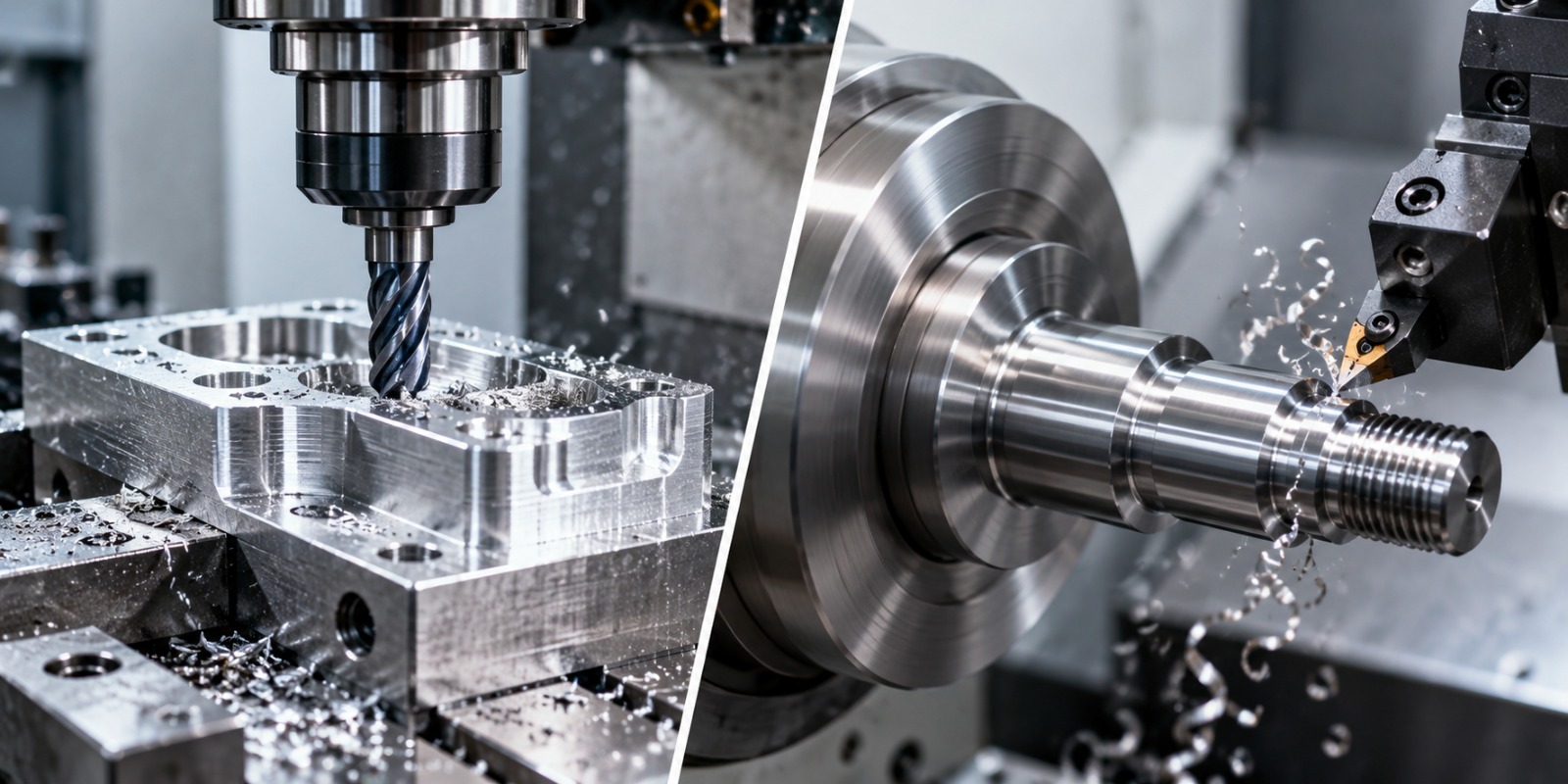
CNC milling is a machining process that uses rotating cutting tools to remove material from a stationary or securely positioned workpiece. The machine follows computer-controlled instructions to create the required shapes, dimensions, holes, slots, and surface features.
CNC milling is particularly suitable for components with flat surfaces, pockets, complex profiles, and multiple machined features. Depending on the machine configuration, it can also produce angled surfaces and intricate geometries.
Common Applications of CNC Milling
CNC milling is commonly used to manufacture:
Mounting plates and custom brackets
Machine housings and enclosures
Mechanical blocks and structural components
Industrial fixtures and tooling
Custom equipment parts
Complex components with pockets, slots, and holes
Moreover, CNC milling supports prototype development and repeat production. Manufacturers can produce components according to CAD models and engineering drawings while maintaining consistent machining requirements.
What Is CNC Lathe Machining?
CNC lathe machining, also called CNC turning, is a manufacturing process in which the workpiece rotates while a cutting tool removes material. The machine follows programmed instructions to create cylindrical shapes, controlled diameters, grooves, threads, and other rotational features.
CNC turning is especially suitable for components that require rotational symmetry. Therefore, it is often the preferred process for producing shafts, pins, bushings, sleeves, and other cylindrical parts.
Common Applications of CNC Lathe Machining
CNC lathe machining is commonly used to manufacture:
Shafts and precision pins
Bushings and sleeves
Rollers and spacers
Threaded components
Cylindrical housings
Couplings and fittings
Custom rotational components
Additionally, CNC turning can produce repeatable cylindrical features when the machining process and inspection requirements are appropriately controlled.
CNC Milling vs CNC Lathe: Key Differences
Although both processes use computer-controlled cutting tools, their operating principles and typical applications differ.
| Feature | CNC Milling | CNC Lathe |
|---|---|---|
| Basic operation | Cutting tool rotates | Workpiece rotates |
| Best suited for | Prismatic and complex-shaped parts | Cylindrical and rotational parts |
| Typical features | Slots, pockets, holes, flat surfaces | Diameters, grooves, threads, cylindrical surfaces |
| Workpiece movement | Usually secured while tools move | Rotates during cutting |
| Common components | Brackets, plates, housings | Shafts, bushings, pins |
| Design suitability | Multiple faces and complex profiles | Rotational symmetry |
| Typical applications | Fixtures, machine parts, enclosures | Rollers, fittings, sleeves |
However, modern CNC machines offer different configurations, and some components can be manufactured using either process or a combination of both. The best choice depends on the part design, tolerances, material, and production requirements.
When Should You Choose CNC Milling?
CNC milling is a suitable option when your component requires features that are difficult to produce efficiently through turning alone.
Consider CNC milling when your part includes:
Multiple flat surfaces: Milling can produce mounting faces, plates, and other components with precise surface features.
Pockets and slots: The process can create recessed areas, channels, and openings according to engineering specifications.
Complex geometries: Multi-axis CNC milling can support angled surfaces and more intricate component designs.
Multiple hole patterns: Milling can produce accurately positioned holes and mounting features when the appropriate tooling and setup are used.
For example, a custom mounting bracket with several holes, recessed pockets, and flat surfaces is generally well suited to CNC milling.
When Should You Choose CNC Lathe Machining?
CNC lathe machining is generally preferable when the part primarily consists of cylindrical or rotational features.
Consider CNC turning when your component requires:
Accurate diameters: Turning is well suited to machining external and internal cylindrical surfaces.
Rotational symmetry: Shafts, pins, and rollers commonly benefit from turning operations.
Grooves and threads: Suitable turning operations can create grooves, threads, and other rotational features.
Repeatable cylindrical components: CNC turning can support consistent production of components with defined diameters and lengths.
For example, a precision shaft with several diameter changes and turned grooves is typically a strong candidate for CNC lathe machining.
Materials Used in CNC Milling and Turning
Both CNC milling and CNC turning can process various metals and engineering plastics, depending on the machine, tooling, and material properties.
Common Metal Materials
Aluminum
Stainless steel
Carbon steel
Brass
Copper
Titanium
Selected alloy steels
Aluminum is often selected for lightweight components, while stainless steel may suit applications requiring corrosion resistance.
Common Engineering Plastics
ABS
Nylon
Polycarbonate
PEEK
Delrin (POM)
Other suitable engineering polymers
Material selection should account for strength, temperature exposure, chemical contact, dimensional stability, and the component’s intended operating environment.
Furthermore, the material can influence tool selection, cutting parameters, machining time, and overall production costs.
Cost Comparison: CNC Milling vs CNC Lathe
The cost of CNC machining depends on several factors, including component geometry, material, tolerances, production quantity, tooling, setup time, and finishing requirements.
CNC milling may require additional machining operations when a component contains complex features or needs work on multiple faces. However, the right machine configuration and machining strategy can help improve efficiency.
CNC turning can be economical for cylindrical components because rotational cutting operations are well suited to producing many common shaft-like geometries.
For larger production quantities, repeatable setups and efficient toolpaths may help reduce the cost per part. Conversely, complex components requiring both milling and turning may need additional operations.
Therefore, compare the complete manufacturing requirements rather than selecting a machine based on hourly rates alone.
Can CNC Milling and CNC Turning Be Used Together?
Yes. Some components require both milling and turning to achieve their final geometry.
For example, a custom mechanical shaft may need turned diameters and grooves along with milled flats, cross-holes, or slots. In this case, combining turning and milling can produce the required features.
Mill-turn machines and suitable multi-axis equipment can perform multiple machining operations within one setup or machine configuration. This approach may reduce handling and improve efficiency for compatible designs.
Nevertheless, the best manufacturing strategy depends on the component’s complexity, available equipment, production quantity, and required accuracy.
How to Choose the Right CNC Machining Process
Before selecting CNC milling or CNC turning, review the following factors:
Part geometry: Determine whether the component is primarily cylindrical, prismatic, or complex.
Required features: Identify holes, slots, pockets, threads, grooves, and angled surfaces.
Material: Confirm the material’s machinability and performance requirements.
Tolerances: Specify critical dimensions and acceptable variation.
Production quantity: Evaluate whether the project requires a prototype, small batch, or larger production run.
Surface finish: Define the required finish for functional and appearance-related surfaces.
Manufacturing cost: Compare setup requirements, machining time, tooling, and finishing operations.
By reviewing these factors early, you can make a more informed manufacturing decision and reduce avoidable design changes.
Get CNC Machining Support from Polymach365
Selecting between CNC milling and CNC lathe machining begins with understanding your component design and production goals. CNC milling is generally suitable for parts with flat surfaces, pockets, slots, and complex profiles, whereas CNC turning is often preferred for cylindrical components and rotational features.
Polymach365 supports digital manufacturing workflows for businesses seeking custom components, functional prototypes, and production parts. Preparing your CAD files, engineering drawings, material specifications, tolerances, and quantity requirements can help establish a suitable manufacturing approach.
Planning your next CNC machining project? Submit your component design and technical requirements to Polymach365 to explore suitable manufacturing options for your part.