
CNC Machining for Small Businesses: A Practical Manufacturing Guide
Small businesses often need reliable manufacturing solutions to develop products, create custom components, and meet customer requirements. However, choosing the right manufacturing process can be challenging when budgets, production quantities, and delivery schedules are limited. CNC machining offers a flexible solution for businesses that need accurate components without investing in their own manufacturing equipment.
Computer Numerical Control (CNC) machining uses computer-programmed instructions to control cutting tools and produce components from materials such as aluminum, stainless steel, and engineering plastics. From functional prototypes to repeat production runs, CNC machining helps small businesses turn product designs into physical parts.
In this guide, we explain how CNC machining works, its benefits, common applications, and the factors small businesses should consider before starting a manufacturing project.
What Is CNC Machining?
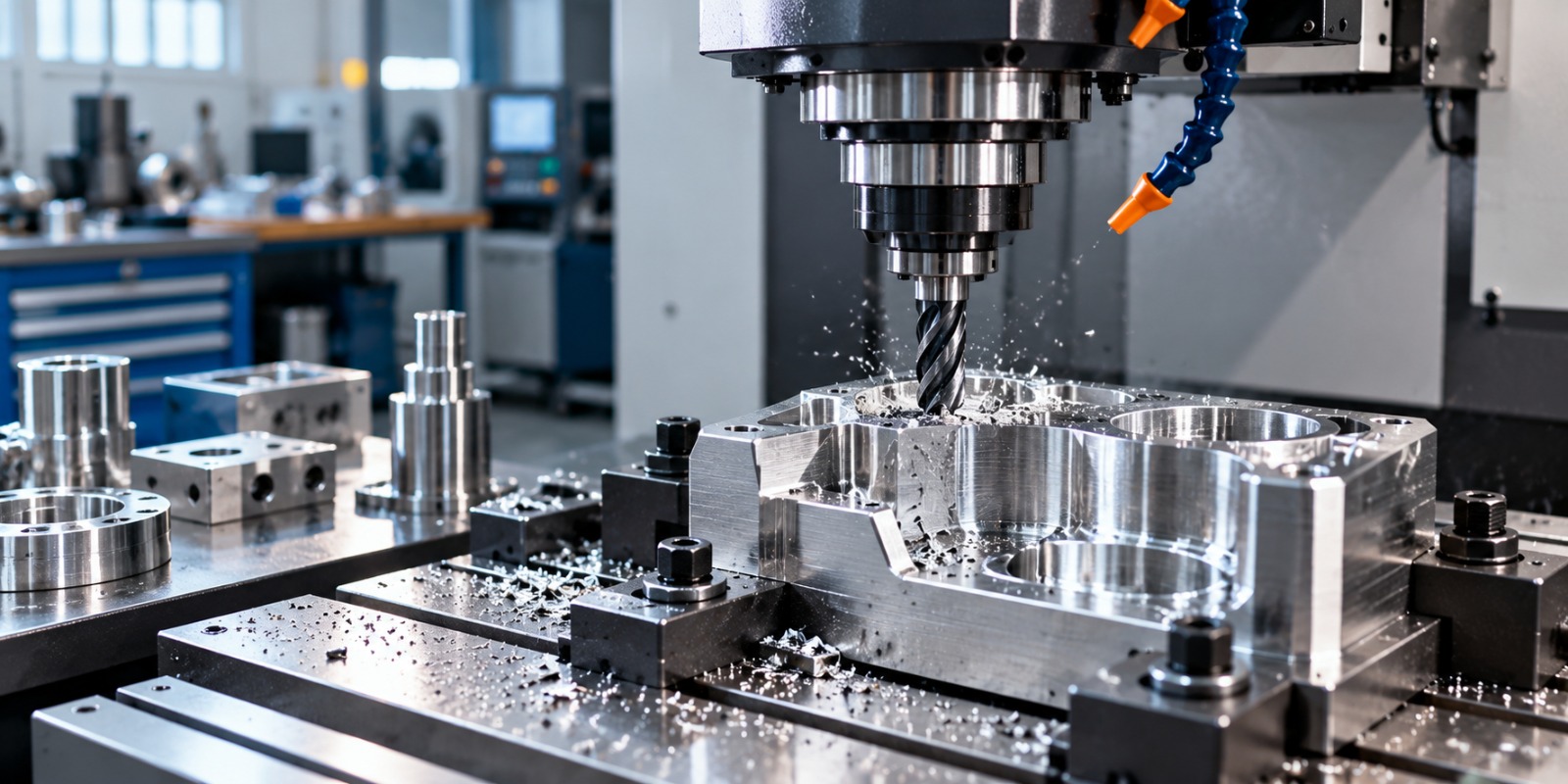
CNC machining is a subtractive manufacturing process that removes material from a solid workpiece to create a component with specific dimensions and features. The machine follows programmed instructions based on a computer-aided design (CAD) model or engineering drawing.
Two common CNC machining processes are milling and turning.
CNC milling: Rotating cutting tools remove material to create flat surfaces, pockets, slots, holes, and complex profiles. This process suits components such as brackets, mounting plates, housings, and machine parts.
CNC turning: The workpiece rotates while a cutting tool shapes its surface. This process is commonly used for shafts, pins, bushings, sleeves, and other cylindrical components.
Depending on the design, manufacturers may also use multi-axis machining to produce complex geometries and features from different orientations.
Why Is CNC Machining Useful for Small Businesses?
Small businesses need manufacturing methods that balance quality, flexibility, and cost. CNC machining can support these goals by producing custom components according to specific engineering requirements.
1. Develop Custom Products
CNC machining allows businesses to manufacture parts that match their product designs rather than relying entirely on standard components. For example, a startup developing industrial equipment can produce custom mounting brackets, housings, and mechanical assemblies.
Moreover, design modifications can often be incorporated by updating the CAD model and machining program, subject to tooling and setup requirements.
2. Produce Functional Prototypes
Before launching a product, businesses need to evaluate its dimensions, fit, strength, and functionality. CNC machining can produce prototypes from production-relevant materials, allowing engineers to identify design issues before committing to larger quantities.
As a result, businesses can test physical components and make informed improvements during product development.
3. Support Small-Batch Manufacturing
Not every business requires thousands of components. CNC machining can be suitable for pilot production, replacement parts, specialized products, and limited manufacturing runs.
Additionally, small-batch production allows businesses to respond to customer demand without immediately committing to large inventory quantities.
4. Improve Manufacturing Consistency
Computer-controlled machining follows programmed toolpaths and defined operating parameters. With suitable equipment, tooling, setups, and inspection procedures, manufacturers can produce repeat components with consistent dimensions.
Therefore, CNC machining can help businesses maintain product quality across repeat orders.
5. Access Different Materials
CNC machining supports a range of engineering materials. Depending on the application and available capabilities, businesses may choose aluminum, stainless steel, carbon steel, brass, nylon, ABS, polycarbonate, or other suitable materials.
Consequently, small businesses can select materials according to strength, weight, durability, environmental exposure, and budget.
Common CNC Machining Applications for Small Businesses
CNC machining supports many industries, from product development to industrial maintenance. The following applications demonstrate how small businesses can use custom-machined components.
Product Development and Startups
Product startups often need prototypes, custom enclosures, mounting components, and mechanical parts. CNC machining helps convert digital designs into physical components for testing and evaluation.
Industrial Equipment and Machinery
Small manufacturers may require replacement parts, fixtures, machine components, and custom tooling. CNC machining can help produce parts when standard alternatives do not meet the required specifications.
Automotive and Transportation
Automotive suppliers and specialized workshops may need custom brackets, spacers, shafts, housings, and prototype components. Material specifications and application requirements should guide the manufacturing process.
Robotics and Automation
Robotics businesses often require precision mounts, motor brackets, mechanical linkages, and custom housings. CNC machining can support the development of specialized assemblies and automation equipment.
Electronics and Consumer Products
Businesses developing electronic devices and consumer products may need enclosures, mounting plates, heat-management components, and structural parts. CNC machining provides flexibility for producing custom designs in suitable materials.
How Much Does CNC Machining Cost for a Small Business?
CNC machining costs vary depending on the part design, material, machining time, production quantity, and required finish. Therefore, obtaining a quotation based on your actual design is more useful than relying on a general price estimate.
Several factors influence the total manufacturing cost.
Material selection: Different materials have different purchase prices, machining characteristics, and availability.
Part complexity: Complex geometries, deep pockets, thin walls, and difficult-to-reach features may require additional operations.
Setup and programming: Preparing the machine, tooling, workholding, and machining program can contribute to the cost, particularly for small quantities.
Production volume: Setup costs can be distributed across more components when producing larger quantities. However, the actual savings depend on the design and manufacturing process.
Tolerances and surface finish: Tight dimensional tolerances and special finishing requirements may increase machining time and inspection costs.
To manage expenses, simplify non-critical design features, select practical tolerances, and provide complete engineering drawings. Furthermore, requesting quotations for several production quantities can help you compare the cost per part.
Choosing the Right CNC Machining Process
Selecting the appropriate process depends on your component’s geometry and functional requirements.
Choose CNC milling when your component requires flat surfaces, pockets, slots, mounting holes, or complex profiles.
Choose CNC turning when your component primarily requires cylindrical surfaces, controlled diameters, grooves, or threads.
Consider combined milling and turning when a component includes both rotational features and milled details.
For example, a rectangular equipment mounting plate is generally suitable for CNC milling, while a stepped cylindrical shaft is often better suited to CNC turning.
However, some parts require multiple machining operations. Reviewing the design with a manufacturing provider can help identify a practical process before production begins.
How Small Businesses Can Start a CNC Machining Project
A structured approach can simplify the manufacturing process and help avoid unnecessary delays.
Step 1: Prepare Your CAD Design
Create a three-dimensional CAD model and provide an engineering drawing where necessary. Include important dimensions, hole locations, tolerances, and other functional requirements.
Step 2: Select the Material
Identify a suitable material based on the component’s strength, weight, operating environment, and intended use. If you are unsure, discuss the available options with your manufacturing provider.
Step 3: Define the Required Quantity
Determine whether you need a single prototype, a small batch, or recurring production quantities. Sharing expected future demand can help manufacturers evaluate suitable production strategies.
Step 4: Review Manufacturability
Check whether the design includes unnecessary complexity, difficult-to-machine features, or unnecessarily tight tolerances. A design-for-manufacturability review can identify opportunities to simplify production.
Step 5: Request a Quotation
Submit your CAD files, material preferences, required quantity, surface finish, tolerances, and delivery expectations. These details help the manufacturing provider assess the project and prepare a relevant quotation.
Step 6: Inspect and Validate the Parts
After manufacturing, check the components against the agreed specifications. Validate critical dimensions, fit, and function before approving larger production runs.
Step 7: Plan Repeat Orders
Once the design is validated, maintain approved drawings and specifications for future orders. This approach helps support consistency and simplifies communication during repeat production.
CNC Machining vs Other Manufacturing Methods
CNC machining is not always the most economical option for every project. Comparing alternative manufacturing methods helps small businesses choose the right solution.
| Manufacturing method | Suitable applications | Key consideration |
|---|---|---|
| CNC machining | Custom metal and plastic components, prototypes, small and medium production runs | Material removal, setup, and machining time affect costs |
| Injection molding | High-volume plastic components | Requires tooling investment |
| 3D printing | Complex prototypes and selected low-volume components | Material properties and surface finish vary by process |
| Manual machining | Certain simple components and repair work | Repeatability and production efficiency depend on the operation |
For example, CNC machining may be practical for a custom aluminum component required in limited quantities. In contrast, injection molding may become more economical for a high-volume plastic product when tooling costs can be distributed across sufficient production volume.
Therefore, compare tooling investment, component requirements, production quantity, and long-term demand before making a decision.
Tips for Reducing CNC Machining Costs
Small businesses can improve manufacturing efficiency by making informed design and production decisions.
Use practical tolerances: Apply tight tolerances only to dimensions that genuinely require them.
Simplify the design: Reduce unnecessary pockets, complex features, and difficult tool access where possible.
Choose suitable materials: Balance material performance with availability and machining requirements.
Combine production orders: When demand is predictable, ordering several components together may reduce repeated setup costs.
Plan production early: Allow sufficient time for design reviews, quotations, manufacturing, and inspection.
Request design feedback: Ask your manufacturing provider to identify opportunities for improving manufacturability.
Moreover, evaluating the total cost of a finished component rather than only the machining rate helps you make better purchasing decisions.
Why Consider Polymach365 for CNC Manufacturing?
Polymach365 provides a digital manufacturing workflow for businesses seeking custom components, prototypes, and production parts. This approach helps customers submit designs and communicate important manufacturing requirements.
Depending on project requirements and available capabilities, CNC machining solutions may include milling, turning, and multi-axis machining for suitable component geometries.
To begin a project, prepare your CAD files, material specifications, required quantities, dimensional tolerances, and finishing requirements. Providing these details helps establish a clear starting point for manufacturing review and quotation.
Conclusion
CNC machining offers small businesses a practical way to manufacture custom components, develop functional prototypes, and plan repeat production. By understanding the differences between milling and turning, selecting appropriate materials, and preparing accurate engineering specifications, businesses can make better manufacturing decisions.
Although CNC machining costs depend on part complexity, material, setup, and production volume, thoughtful design and production planning can help control expenses.
Ready to manufacture custom components? Contact Polymach365 to discuss your CAD designs, material requirements, and production quantities and explore suitable CNC machining options for your project.