CNC Machining for Custom Components: From Design to Production
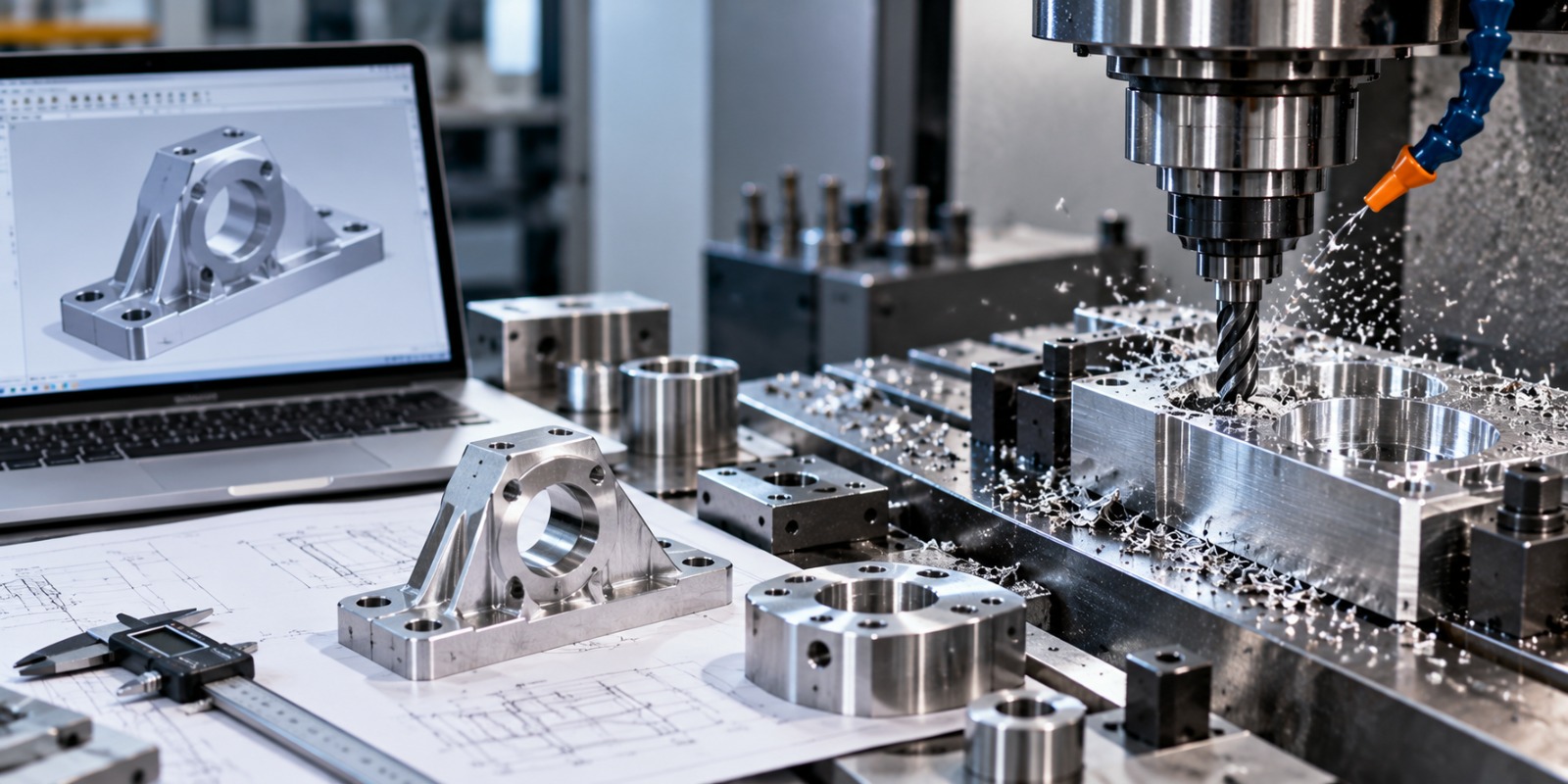
Custom components play an important role in modern manufacturing, product development, and industrial engineering. Businesses often require parts with specific dimensions, complex geometries, or material properties that standard components cannot provide. CNC machining offers a practical solution by converting digital designs into precision-machined parts that meet defined engineering requirements.
From initial CAD modeling to final production, every stage influences component quality, manufacturing efficiency, and overall cost. Therefore, understanding the CNC machining process helps businesses make informed decisions when developing prototypes, replacement parts, and production components.
At Polymach365, a digital manufacturing workflow helps businesses explore machining solutions for custom components based on their designs, materials, and production requirements.
What Is CNC Machining for Custom Components?
Computer Numerical Control (CNC) machining is a subtractive manufacturing process that uses programmed instructions to control cutting tools. These tools remove material from a workpiece to create components according to engineering drawings and digital designs.
CNC machining supports a wide range of custom manufacturing applications, including metal brackets, machine housings, shafts, mounting plates, fixtures, and engineering plastic parts.
Moreover, the process can accommodate different production requirements. Businesses can use CNC machining to develop functional prototypes, manufacture small batches, and produce repeat components when the design and process are suitable.
Step 1: Designing Custom Components with CAD Software
The manufacturing process begins with a digital design. Computer-Aided Design (CAD) software allows engineers and product designers to create three-dimensional models that define the component’s geometry, dimensions, and important features.
An accurate CAD model provides the foundation for machining and helps communicate the intended design to the manufacturing team.
Important Design Considerations
When preparing a custom component for CNC machining, consider the following factors:
Dimensions: Define the overall size and critical measurements of the component.
Tolerances: Specify acceptable dimensional variation for important features.
Geometry: Review pockets, holes, slots, curves, and other design elements.
Wall thickness: Ensure the design is suitable for the selected material and machining process.
Surface finish: Identify areas that require specific surface quality.
Assembly requirements: Consider how the component will fit with other parts.
Furthermore, clear engineering drawings can communicate requirements that may not be obvious from the three-dimensional model alone. Consequently, preparing complete design documentation can help reduce misunderstandings during manufacturing.
Step 2: Selecting the Right Material
Material selection directly affects component strength, weight, durability, machinability, and cost. Therefore, the chosen material should match the part’s intended function and operating environment.
CNC-Machined Metal Components
Common metal materials include:
Aluminum: Suitable for many lightweight components, housings, and mounting plates.
Stainless steel: Useful for applications requiring corrosion resistance and mechanical strength.
Carbon steel: Used for various structural and mechanical components.
Brass: Suitable for selected fittings, connectors, and precision components.
Copper: Used in applications where electrical or thermal conductivity is important.
Titanium: Considered for applications requiring a combination of low weight and high strength.
Material grades and availability should be confirmed according to the specific project requirements.
CNC-Machined Plastic Components
Engineering plastics can provide useful combinations of low weight, machinability, chemical resistance, and dimensional performance.
Common options include ABS, nylon, polycarbonate, PEEK, and Delrin (POM). However, each material has different mechanical and thermal properties.
For example, a component exposed to elevated temperatures may require a different material from a lightweight enclosure used in a general indoor application. Therefore, evaluate operating conditions before finalizing material selection.
Step 3: Choosing the Appropriate CNC Machining Process
Once the design and material are defined, the next step is selecting a suitable machining process. The choice depends on the component’s shape, required features, tolerances, and production quantity.
CNC Milling for Complex Geometries
CNC milling uses rotating cutting tools to remove material from a workpiece. It is suitable for producing flat surfaces, pockets, slots, holes, brackets, housings, and components with multiple machined features.
Additionally, multi-axis milling can support angled surfaces and complex geometries when the machine configuration is appropriate.
CNC Turning for Cylindrical Components
CNC turning rotates the workpiece while a cutting tool shapes its surface. It is commonly used to manufacture shafts, pins, bushings, sleeves, rollers, and threaded components.
Consequently, turning is often suitable for custom parts that require rotational symmetry and controlled diameters.
Combined Milling and Turning
Some components require both rotational features and milled details. In these cases, manufacturers may combine milling and turning operations to achieve the required geometry.
For example, a custom shaft may require turned diameters along with milled flats and cross-holes. Reviewing the design before production helps determine an efficient manufacturing approach.
Step 4: Reviewing Design for Manufacturability
Design for Manufacturability (DFM) involves evaluating a component design to identify opportunities to simplify production and reduce unnecessary manufacturing challenges.
A design may look suitable in CAD software but require additional machining operations because of deep pockets, difficult tool access, complex internal features, or unnecessarily tight tolerances.
A DFM review can help identify these issues before production begins.
How DFM Can Improve Manufacturing
Simplifying unnecessary geometric features
Using practical tolerances where appropriate
Improving cutting-tool access
Reducing the number of machining setups
Selecting materials that suit the component’s function
Identifying features that may increase machining time
Moreover, reviewing manufacturability early can reduce avoidable design changes and help establish more realistic production expectations.
Step 5: Preparing the CNC Program
After the design and manufacturing approach are confirmed, the CAD model is translated into machine instructions, commonly through Computer-Aided Manufacturing (CAM) software.
CAM software helps generate toolpaths that define how the cutting tools move during machining. The resulting CNC program controls operations such as tool movement, cutting sequences, spindle speed, and feed rate.
Before production, the program and setup should be checked to confirm that the planned operations are suitable for the component.
Depending on the project, preparation may include:
Selecting appropriate cutting tools
Defining machining operations and toolpaths
Establishing workholding and setup requirements
Reviewing cutting parameters
Checking tool clearance and potential collisions
As a result, proper programming and setup help establish the foundation for accurate and efficient machining.
Step 6: Machining the Custom Components
During production, the CNC machine follows the programmed instructions to remove material and create the required component features.
The selected process may involve milling, turning, drilling, boring, or other suitable machining operations. Some components can be completed in one setup, while others require multiple setups or machines.
Throughout machining, factors such as tool condition, material properties, workholding, and cutting parameters can influence the final result.
Therefore, appropriate process control is important when manufacturing components with critical dimensions or demanding surface requirements.
Step 7: Inspection and Quality Verification
After machining, the finished components should be evaluated against the agreed engineering specifications. Inspection helps determine whether the parts meet the required dimensional and functional criteria.
Depending on the project, quality checks may include:
Overall dimensions and critical measurements
Hole diameters and locations
Flatness and alignment
Thread dimensions
Surface finish
Fit with mating components
Specialized measuring equipment may be required for tight tolerances or complex geometries.
Furthermore, inspection requirements should be defined before production, especially when components will be used in assemblies or applications with strict performance requirements.
Step 8: Surface Finishing and Post-Processing
Some custom components require additional processing after machining. Surface finishing can improve appearance, corrosion resistance, wear performance, or other application-specific properties.
Common finishing options may include deburring, polishing, anodizing, plating, coating, and other suitable treatments.
However, not every finish is appropriate for every material or component. Finishing can also affect dimensions, so critical measurements and tolerances should account for any required post-processing.
Consequently, identifying finishing requirements during the quotation stage helps improve manufacturing planning.
CNC Machining for Prototypes and Production Runs
CNC machining supports different stages of product development and manufacturing.
Prototype Manufacturing
Prototypes help engineers evaluate component fit, function, and design feasibility before moving to larger production quantities. CNC machining can produce physical parts from engineering designs using suitable production materials.
Small-Batch Manufacturing
Small batches are useful for pilot runs, specialized products, replacement components, and projects with uncertain demand. They also allow businesses to validate designs before increasing production.
Repeat Production
Once the design is approved, repeat manufacturing can support ongoing product demand. Consistent drawings, machining programs, setups, and inspection procedures help maintain repeatability.
The most suitable production strategy depends on quantity, design stability, material costs, setup requirements, and delivery expectations.
Factors That Affect the Cost of Custom CNC Components
The cost of CNC-machined components depends on several interconnected factors. Understanding them helps businesses prepare realistic budgets and compare manufacturing quotations.
Material costs: Different materials and grades have different prices and machining characteristics.
Design complexity: Complex geometries may require additional tools, operations, and machining time.
Tolerances: Tight tolerances can increase setup, machining, and inspection requirements.
Production quantity: Setup costs may be distributed across more parts in larger batches, potentially lowering the cost per component.
Surface finishing: Additional treatments can increase processing time and total manufacturing costs.
Lead time: Urgent production requirements may affect scheduling and pricing, depending on available capacity.
To manage costs, provide complete design documentation, use practical tolerances, and discuss potential design improvements before production begins.
Why Choose Polymach365 for Custom CNC Components?
Polymach365 provides a digital manufacturing workflow for businesses seeking custom components, prototypes, and production parts. Customers can submit CAD files and communicate their material, quantity, and engineering requirements for manufacturing review.
Depending on project specifications and available capabilities, CNC machining options may include milling, turning, and multi-axis machining for suitable component geometries.
Preparing your three-dimensional model, engineering drawings, material preferences, tolerances, surface finish, and required quantities can help establish a clear starting point for a manufacturing quotation.
Conclusion: From CAD Design to Finished CNC Components
CNC machining transforms digital designs into custom components through a structured process involving CAD modeling, material selection, process planning, programming, machining, inspection, and finishing.
Each stage contributes to the quality, functionality, and cost of the finished part. Therefore, clear design documentation, practical tolerances, and early manufacturability reviews can help businesses avoid unnecessary production challenges.
Whether you need a functional prototype, a specialized replacement component, or repeat production parts, selecting an appropriate machining process is essential.
Ready to manufacture custom components? Contact Polymach365 to discuss your CAD designs, material requirements, and production quantities and explore suitable CNC machining solutions for your project.