How CNC Machining Helps Manufacturers Create Repeatable Custom Parts
Manufacturers often need custom components that meet specific dimensions, functional requirements, and quality standards. However, producing the same part consistently across multiple manufacturing runs can be challenging without a reliable production process. CNC machining helps address this challenge by using computer-controlled equipment to manufacture components according to programmed instructions.
From custom metal components to engineering plastic parts, CNC machining supports repeatable production for businesses across various industries. By combining accurate digital designs, suitable machining strategies, and consistent inspection procedures, manufacturers can improve production reliability and reduce unnecessary variations.
In this article, we explore how CNC machining helps manufacturers create repeatable custom parts and why process consistency matters in modern manufacturing.
What Is Repeatable Manufacturing in CNC Machining?
Repeatable manufacturing means producing multiple components that consistently meet the same engineering specifications. These parts should maintain the required dimensions, geometry, and functional characteristics across production batches.
CNC machining uses computer numerical control to guide cutting tools along programmed toolpaths. Once the machining program and setup are established, manufacturers can reuse them for subsequent production runs when the design and manufacturing conditions remain unchanged.
However, repeatability depends on more than the CNC program alone. Machine condition, tool wear, workholding, material consistency, cutting parameters, and inspection practices also influence the final results.
Therefore, manufacturers must manage these factors carefully to achieve reliable production outcomes.
1. Digital Designs Support Consistent Production
The manufacturing process begins with a computer-aided design (CAD) model or engineering drawing. These digital resources define the component’s geometry, dimensions, and important features.
A clearly defined design gives manufacturers a consistent reference throughout production. Instead of relying on manual measurements and repeated interpretation, the machining process follows programmed instructions based on the approved specifications.
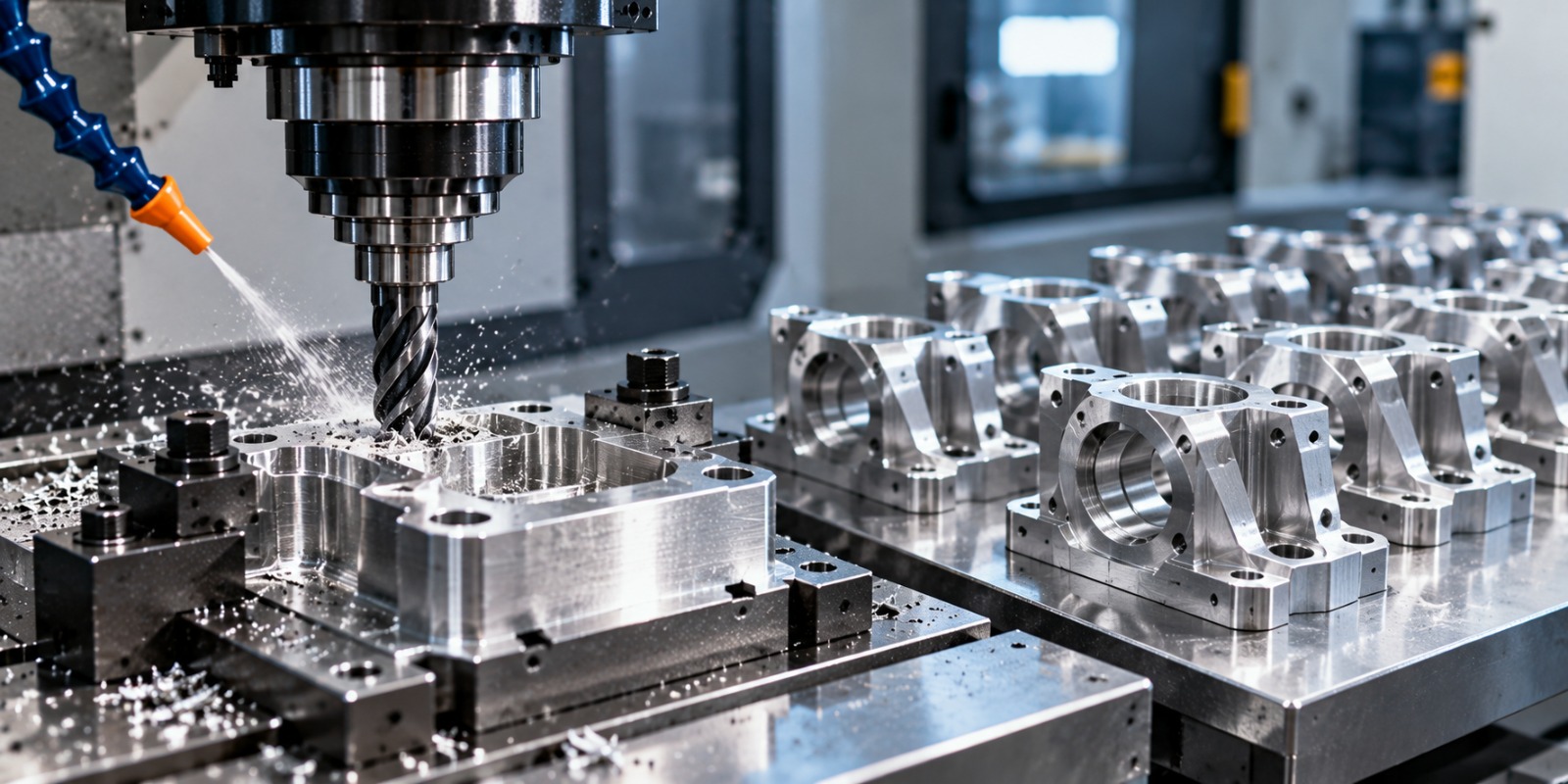
For example, a custom aluminum mounting bracket may require several holes, recessed pockets, and accurately positioned mounting surfaces. A detailed CAD model helps define these features before machining begins.
Moreover, maintaining an approved version of the design helps prevent unintended differences between production batches.
2. CNC Programs Help Standardize Machining Operations
Computer-aided manufacturing (CAM) software can convert digital component designs into toolpaths and machine instructions. These instructions define how cutting tools move and remove material during machining.
Once a program has been tested and approved, manufacturers can reuse it for repeat orders when the part design, machine configuration, and setup remain compatible.
This approach helps standardize machining operations and reduces reliance on manually repeating individual machining steps.
Additionally, documented cutting parameters and setup instructions help manufacturing teams follow an established process. Consequently, repeat orders can be planned more efficiently while maintaining the intended component specifications.
3. CNC Milling and Turning Support Different Part Geometries
Selecting the appropriate machining process is essential for producing consistent custom components.
CNC Milling for Complex Components
CNC milling uses rotating cutting tools to create features such as flat surfaces, holes, slots, pockets, and complex profiles. It is suitable for custom brackets, mounting plates, machine housings, and industrial fixtures.
When the program, workholding, and cutting conditions remain controlled, CNC milling can support repeat production of components with multiple machined features.
CNC Turning for Cylindrical Components
CNC turning rotates the workpiece while a cutting tool shapes its surface. Manufacturers commonly use this process to produce shafts, pins, bushings, sleeves, rollers, and threaded components.
Turning is particularly suitable for parts requiring controlled diameters and rotational features.
Therefore, choosing the correct machining process helps manufacturers establish a suitable production method for each custom component.
4. Consistent Workholding Improves Repeatability
Workholding refers to the fixtures, clamps, vises, and other devices used to secure a component during machining. Proper workholding keeps the material stable while cutting tools remove material.
If a component shifts during machining, its dimensions and feature positions may differ from the intended specifications.
Using suitable fixtures and documented setup procedures helps manufacturers position components consistently across production runs. For parts requiring multiple machining operations, repeatable positioning can also reduce alignment errors between setups.
Furthermore, selecting appropriate workholding helps minimize vibration and supports stable machining conditions.
5. Tool Management Helps Maintain Dimensional Accuracy
Cutting tools gradually wear during machining. As wear increases, it can affect surface finish, cutting performance, and dimensional accuracy.
Manufacturers can manage this risk through regular tool inspections, planned tool replacement, and suitable machining parameters.
Tool offsets and compensation may also be adjusted when necessary to maintain the required dimensions. However, these adjustments should follow appropriate measurement and process-control procedures.
For repeat production, documented tooling information helps manufacturing teams identify the correct tools and monitor their condition.
As a result, effective tool management can reduce dimensional variation and improve the consistency of finished components.
6. Material Selection Influences Repeat Production
The material used to manufacture a component can affect machining performance, dimensional stability, surface finish, and production consistency.
Common CNC machining materials include aluminum, stainless steel, carbon steel, brass, and engineering plastics such as nylon, ABS, polycarbonate, and Delrin (POM).
Different materials respond differently to cutting forces, heat, and machining conditions. For example, material properties and temperature changes can influence dimensional measurements during and after machining.
Therefore, selecting an appropriate material grade and maintaining consistent material specifications can help manufacturers achieve more predictable production results.
7. Quality Inspection Verifies Repeatability
Inspection is essential for confirming that finished components meet the required specifications. Even when a CNC machine follows the same program, manufacturers must verify that the actual parts match the intended design.
Depending on the component, inspection may include:
Overall dimensions and critical measurements
Hole diameters and feature positions
Flatness and alignment
Thread dimensions
Surface finish
Fit with mating components
Manufacturers may use calibrated measuring instruments, gauges, coordinate measuring machines, or other suitable inspection equipment.
In addition, checking the first completed part before continuing a production run can help identify setup issues early. Further inspections during production can detect changes caused by tool wear or process variation.
Consequently, a defined inspection plan helps confirm whether production remains within the agreed requirements.
8. CNC Machining Supports Efficient Repeat Orders
Once a custom component has been manufactured, inspected, and approved, the associated design files, machining programs, tooling information, and setup instructions can be retained for future orders.
This documentation helps manufacturers prepare repeat production without recreating the entire process from the beginning.
For example, a manufacturer that regularly requires custom machine brackets may reuse an approved design and compatible machining program for subsequent batches. The team must still verify material availability, tool condition, machine setup, and current specifications before production.
Moreover, maintaining revision-controlled documentation helps prevent outdated designs from being used unintentionally.
Repeatable CNC machining can provide several practical advantages when the process is properly planned and controlled.
Consistent Component Quality
Following established machining and inspection procedures helps manufacturers produce parts that meet the same specified requirements across multiple batches.
Reduced Rework and Material Waste
Identifying setup errors and dimensional deviations early can reduce the number of rejected components and avoid unnecessary material consumption.
More Predictable Production Planning
Approved programs, documented setups, and known machining requirements help teams estimate production activities more effectively.
Support for Custom Product Development
Manufacturers can develop specialized components without relying exclusively on standard off-the-shelf parts.
Easier Repeat Ordering
Retaining approved designs and manufacturing documentation simplifies communication when businesses need additional quantities of previously manufactured components.
However, these benefits depend on appropriate equipment, process controls, material consistency, and quality management.
Factors That Can Affect CNC Machining Repeatability
Even a well-programmed CNC machine can produce variations if important manufacturing conditions change.
Common factors include:
Cutting tool wear or damage
Incorrect workpiece positioning
Material variations between batches
Machine maintenance and thermal conditions
Changes to machining parameters
Inconsistent inspection methods
Uncontrolled engineering drawing revisions
To reduce these risks, manufacturers should document the production setup, monitor critical machining conditions, maintain equipment, and verify finished components against approved specifications.
Furthermore, tolerances should reflect the component’s actual functional requirements. Applying unnecessarily tight tolerances can increase machining and inspection costs without improving product performance.
Why Choose Polymach365 for Custom CNC Parts?
Polymach365 provides a digital manufacturing workflow for businesses exploring custom components, prototypes, and production parts. Customers can submit CAD files and share important manufacturing details, including materials, quantities, tolerances, and finishing requirements.
Depending on the project and available capabilities, CNC machining options may include milling, turning, and multi-axis machining for suitable component geometries.
Preparing accurate engineering drawings and communicating repeat-order requirements can help establish a clear starting point for manufacturing review and quotation.
Conclusion
CNC machining helps manufacturers create repeatable custom parts by combining digital designs, programmed toolpaths, controlled workholding, appropriate tool management, and systematic inspection.
Although CNC programming provides a consistent foundation, reliable repeat production also requires attention to materials, machine condition, machining parameters, and quality verification.
By maintaining approved design files and documenting manufacturing procedures, businesses can simplify repeat orders and improve production planning.
Need custom CNC components for your next manufacturing project?
Contact Polymach365 to discuss your CAD designs, material specifications, production quantities, and repeat-order requirements.