CNC Machining for Small Batch Manufacturing: Benefits and Applications
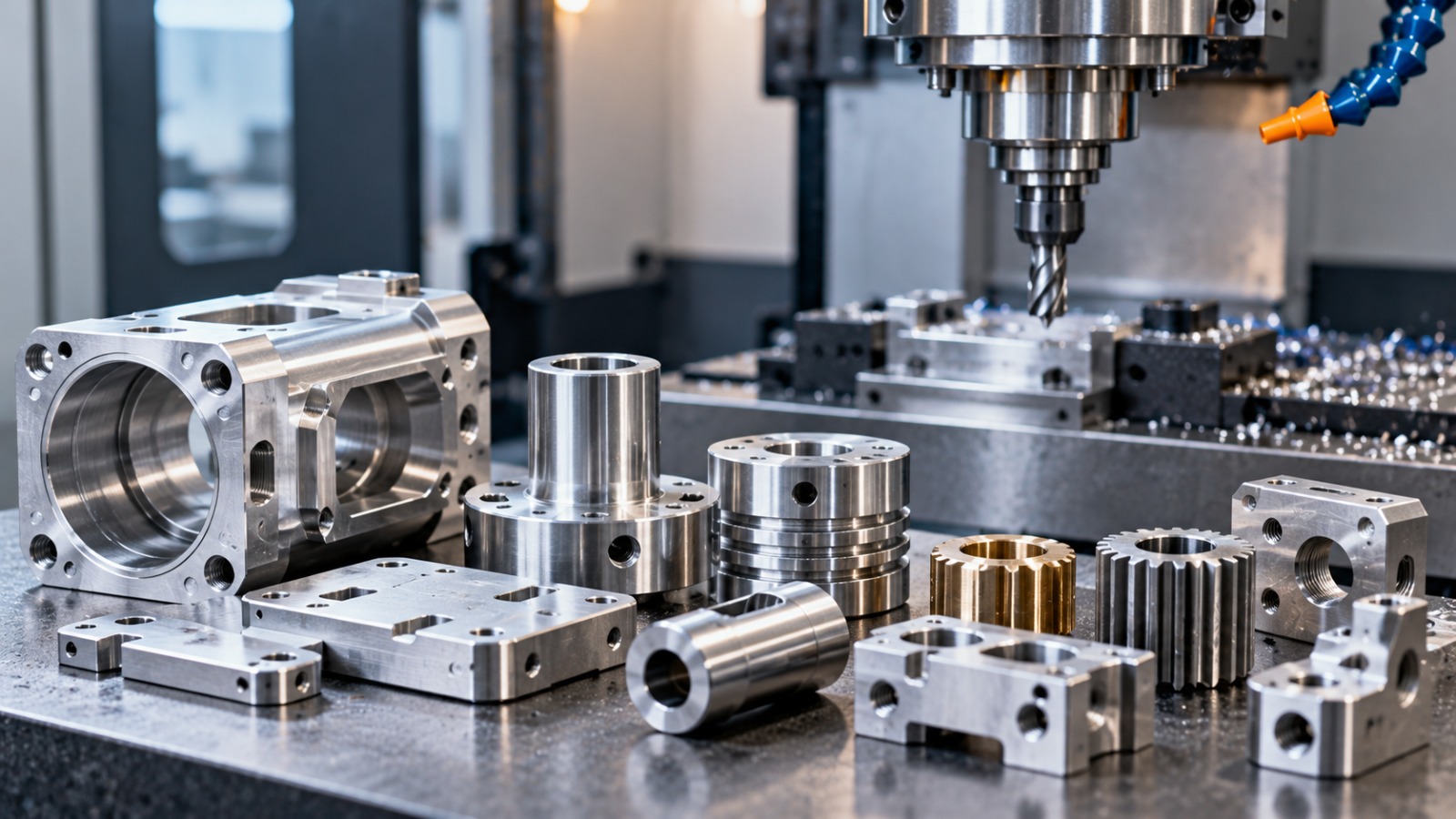
Small batch manufacturing helps businesses produce a limited number of components without committing to large production volumes. It is particularly useful for product development, prototype testing, specialized equipment, and customized manufacturing requirements. CNC machining for small batch manufacturing offers an effective way to produce accurate, repeatable metal and plastic components while maintaining flexibility throughout the production process.
For manufacturers in Canada, CNC machining can support product innovation, replacement part production, and changing customer requirements. By choosing suitable machining methods and materials, businesses can manufacture components that meet their design specifications and production goals.
In this guide, we explore how CNC machining works for small batch manufacturing, its key benefits, common applications, and the factors businesses should consider before starting a project.
What Is CNC Machining for Small Batch Manufacturing?
CNC machining for small batch manufacturing is a production process that uses computer-controlled machines to manufacture a limited quantity of components from a digital design or technical drawing.
CNC stands for Computer Numerical Control. The machine follows programmed instructions to remove material from a workpiece and create the required shape, dimensions, and features.
Unlike mass production, which focuses on manufacturing large quantities of identical products, small batch manufacturing produces fewer parts according to specific project requirements. Depending on the component design, a small batch may contain just a few parts or several hundred units.
CNC machining is suitable for small batches because the same digital program can be reused to manufacture additional components. As a result, businesses can maintain consistency while adjusting designs, materials, or quantities when necessary.
How Does CNC Machining Work for Small Batch Production?
CNC machining follows a structured workflow that converts a digital design into a finished component.
1. Design the Component
The process begins with a CAD file, technical drawing, or detailed component specification. The design defines the part’s dimensions, geometry, tolerances, and other manufacturing requirements.
2. Select the Material
The material depends on the component’s intended application. Aluminum, stainless steel, carbon steel, brass, engineering plastics, and other machinable materials may be suitable, depending on the project.
3. Prepare the CNC Program
A CAM system can convert the design into machining instructions. These instructions guide the cutting tools, tool paths, speeds, and movements required to manufacture the component.
4. Machine the Parts
The CNC machine removes material from the workpiece using the programmed process. CNC milling, CNC turning, or a combination of machining methods may be used depending on the design.
5. Inspect the Finished Components
The manufactured parts are checked against the specified dimensions and quality requirements. Additional finishing operations may be needed for certain applications.
6. Complete the Production Order
Once the components meet the agreed requirements, they can be prepared for delivery or further assembly.
This workflow helps businesses move from design to production without requiring the same type of dedicated tooling often associated with some high-volume manufacturing processes.
What Are the Main Benefits of CNC Machining for Small Batch Manufacturing?
CNC machining offers several advantages for businesses that need limited production quantities. However, the actual benefits depend on the component design, material, tolerances, and production requirements.
1. Lower Initial Tooling Requirements
Some traditional manufacturing methods require dedicated molds, dies, or specialized tooling before production can begin. These costs can make low-volume production less economical.
CNC machining generally uses programmed tool paths and standard or application-specific cutting tools. Therefore, it can be a practical option for small batches, particularly when dedicated production tooling would be expensive.
However, CNC machining still involves setup, programming, workholding, and tooling costs. These expenses should be considered when comparing manufacturing methods.
2. High Dimensional Accuracy
CNC machines follow programmed instructions to manufacture components according to specified dimensions. With suitable equipment, tooling, and process control, manufacturers can achieve tight tolerances where the application requires them.
This precision is valuable for mechanical assemblies, industrial equipment, brackets, housings, and other components that must fit together correctly.
Actual tolerances depend on factors such as material properties, part geometry, machining strategy, and inspection methods.
3. Consistent Component Quality
Small batch manufacturing often requires several parts with matching dimensions and features. CNC machining helps maintain repeatability because the same program and process can be used for multiple components.
Additionally, suitable inspection procedures can help identify dimensional variations before parts move to assembly or final use.
4. Design Flexibility
Product designs may change during development or after initial testing. CNC machining allows manufacturers to update the digital design and machining program without necessarily creating an entirely new production mold.
Consequently, businesses can refine component geometry, modify mounting features, or adjust dimensions between production batches.
5. Faster Product Development
CNC machining can help product developers manufacture functional prototypes and limited production quantities for testing.
For example, an engineering team can evaluate a machined component, identify design improvements, and produce an updated version. This process supports iterative development before a business invests in larger-scale production.
Actual lead times depend on programming, material availability, machine capacity, finishing, and inspection requirements.
6. Wide Material Selection
CNC machining supports a range of metals and engineering plastics. This flexibility allows businesses to select materials based on strength, weight, corrosion resistance, thermal properties, and operating conditions.
For example, aluminum may suit lightweight housings, while stainless steel may be appropriate for components exposed to corrosive environments.
The material should always match the component’s intended use and engineering specifications.
7. Suitable for Specialized and Replacement Parts
Some industrial components are needed only in limited quantities. Others may be discontinued, customized, or designed for a specific machine.
CNC machining can produce these parts from available technical drawings or suitable reverse-engineered designs, provided the component can be manufactured safely and within the required specifications.
This makes the process useful for maintenance, repair, and specialized equipment projects.
What Are the Common Applications of Small Batch CNC Machining?
Small batch CNC machining serves a wide range of industries. It is particularly useful when businesses need precise components without the demand for mass production.
Automotive and Transportation
Automotive businesses may use CNC machining to manufacture prototypes, brackets, fixtures, housings, and specialized mechanical components.
Small batch production can support design testing, equipment development, and selected replacement part requirements. Components intended for safety-critical applications must also meet the applicable engineering and regulatory requirements.
Industrial Machinery and Equipment
Industrial machines often contain components designed around specific operating conditions. CNC machining can produce shafts, mounting plates, machine housings, spacers, and custom fittings.
Small batch production is useful when equipment manufacturers need a limited number of parts for a new machine, a modification, or a maintenance project.
Robotics and Automation
Robotics systems require components that fit specific mechanical arrangements. These may include motor mounts, brackets, grippers, connector plates, and structural parts.
CNC machining supports iterative development because engineers can update designs as they test movement, fit, and performance.
Aerospace and Engineering
Engineering projects may require components with complex geometries, specific materials, and defined dimensional tolerances.
CNC machining can support prototypes and specialized production runs. Aerospace components may require additional traceability, material certification, inspection, and process controls, depending on their intended application.
Electronics and Electrical Equipment
Electronic systems may use machined enclosures, mounting components, heat sinks, and structural parts.
Material selection is important because components may need to provide electrical conductivity, thermal management, mechanical protection, or a combination of these properties.
Medical Equipment Development
Small batch CNC machining may be used to develop prototypes, equipment housings, fixtures, and certain specialized components for medical equipment.
However, components intended for medical use may require specific materials, validated manufacturing processes, cleanliness controls, and regulatory compliance. Requirements depend on the device and its intended use.
Product Development and Startups
Startups and product development teams often need a limited number of components to test a new concept or prepare for market evaluation.
CNC machining allows these teams to manufacture functional parts before deciding whether larger-scale production is appropriate.
Which CNC Machining Processes Are Suitable for Small Batches?
The right machining process depends on the shape, size, material, and features of the component.
CNC Milling
CNC milling uses rotating cutting tools to remove material from a workpiece. It is suitable for components with flat surfaces, pockets, slots, holes, and complex three-dimensional features.
Common applications: Brackets, mounting plates, housings, fixtures, and machine components.
CNC Turning
CNC turning rotates the workpiece while a cutting tool removes material. It is particularly suitable for cylindrical and rotational components.
Common applications: Shafts, pins, bushings, spacers, and threaded components.
Multi-Axis CNC Machining
Multi-axis machining allows cutting tools and workpieces to move along multiple axes. Depending on the machine and setup, this can help manufacture complex geometries and features across several surfaces.
Common applications: Complex mechanical parts, specialized housings, and components with multiple angled features.
CNC Machining With Secondary Finishing
CNC machining is not the only option for low-volume production. Comparing alternative methods helps businesses select an appropriate manufacturing process.
| Manufacturing method | Best suited for | Key consideration |
|---|---|---|
| CNC machining | Precision metal and plastic parts | Material removal, setup, and machining time affect cost |
| 3D printing | Complex geometries and rapid prototypes | Material properties and surface finish vary by process |
| Injection molding | Plastic components when tooling costs can be justified | Mold development increases initial investment |
| Sheet metal fabrication | Enclosures, panels, brackets, and formed parts | Suitable for designs based on cutting, bending, and forming |
| Casting | Components suited to a casting process | Pattern, mold, finishing, and material requirements affect feasibility |
For a small quantity of precision metal components, CNC machining may be more practical than injection molding or other tooling-intensive methods. However, 3D printing or sheet metal fabrication may be more suitable for certain designs.
The best option depends on production quantity, geometry, material, required accuracy, surface finish, and total project cost.
How Do You Choose a CNC Machining Partner for Small Batch Manufacturing?
Selecting a suitable manufacturing partner can help businesses manage quality, costs, and delivery expectations.
Consider the following factors before starting a project.
Manufacturing Capabilities
Confirm whether the provider can manufacture your component using the required machining process. Complex geometries may require specific machine capabilities or additional setups.
Material Availability
Check whether the required material grade, size, and condition are available. Material substitutions should be approved against the component’s engineering requirements.
Tolerance and Inspection Requirements
Provide clear dimensional tolerances and identify any critical features. If the component requires inspection reports or material certifications, specify these requirements before requesting a quote.
Prototype and Batch Flexibility
Choose a provider that can evaluate your required quantity and determine a suitable production approach. A process that works for ten parts may not be the most economical option for several thousand parts.
Communication and Delivery
Discuss project timelines, finishing requirements, packaging, and shipping arrangements. For businesses across Canada, delivery planning should account for the destination, shipping method, and production schedule.
Transparent Quotation
A useful quotation should clarify the part quantity, material, machining requirements, finishing, inspection, and delivery terms. This makes it easier to compare proposals on a like-for-like basis.
What Information Should You Provide for a Small Batch CNC Machining Quote?
Providing complete project details helps a manufacturing provider assess feasibility and prepare a more accurate quotation.
Before requesting a quote, prepare the following information:
CAD files or technical drawings: Include the latest approved design and relevant dimensions.
Material specifications: Identify the required metal or engineering plastic and grade, where applicable.
Production quantity: State the number of prototype parts and production units required.
Tolerance requirements: Highlight critical dimensions and fit requirements.
Surface finish: Specify any required finish, coating, or secondary operation.
Intended application: Explain how the component will be used and any important operating conditions.
Delivery requirements: Provide the destination and desired timeline.
If some details are not finalized, explain which requirements remain flexible. A manufacturing provider may be able to identify design adjustments that improve manufacturability or reduce unnecessary machining costs.
Is CNC Machining Cost-Effective for Small Batch Manufacturing?
CNC machining can be cost-effective for small batch production when precision, material performance, and design flexibility are important. However, it is not automatically the cheapest method for every component.
The total cost typically depends on several factors:
Part geometry and complexity
Material type and workpiece size
Programming and machine setup time
Machining time per component
Required tolerances and inspection
Surface finishing and secondary operations
Order quantity and delivery requirements
For example, a simple component made in a small quantity may have a relatively high per-part cost because setup expenses are spread across fewer units. Increasing the batch size may reduce the average cost per part, depending on the manufacturing process.
Therefore, businesses should compare the complete project cost rather than considering the machining price alone.
Frequently Asked Questions About CNC Machining for Small Batch Manufacturing
What is considered a small batch in CNC machining?
A small batch is a limited production quantity rather than a standardized number. Depending on the part and industry, it may involve a few components, dozens of units, or several hundred parts.
Is CNC machining suitable for prototype manufacturing?
Yes. CNC machining can produce functional prototypes from metals and engineering plastics. It is particularly useful when the prototype needs to represent the intended material, dimensions, or mechanical features of the final component.
Can CNC machining produce custom metal parts in small quantities?
Yes. CNC milling, CNC turning, and other suitable machining processes can produce custom metal components in limited quantities. The best approach depends on the part design, material, tolerances, and available equipment.
Which materials are commonly used for small batch CNC machining?
Common materials include aluminum, stainless steel, carbon steel, brass, copper, titanium, and various engineering plastics. The right choice depends on the component’s mechanical, thermal, environmental, and dimensional requirements.
Is CNC machining better than 3D printing for small batch production?
Neither method is always better. CNC machining is often suitable for parts requiring specific material properties, machined surfaces, and dimensional accuracy. 3D printing can be useful for complex geometries, rapid design iterations, and certain low-volume prototypes.
Does CNC machining become cheaper when production quantities increase?
The average cost per part may decrease as setup and programming costs are distributed across more units. However, the overall savings depend on machining time, tooling, material usage, and whether another manufacturing method becomes more economical at higher volumes.
Can Canadian businesses order small batch CNC-machined components?
Canadian businesses can work with suitable CNC machining providers to manufacture custom components for product development, industrial equipment, and other applications. Before placing an order, confirm the provider’s capabilities, material options, quality requirements, lead times, and delivery arrangements.
What files are needed to request a CNC machining quote?
A CAD file or dimensioned technical drawing is generally the most useful starting point. You should also provide the material, quantity, critical tolerances, surface finish, and intended application when available.
Conclusion
CNC machining for small batch manufacturing gives businesses a flexible way to produce precision components without immediately committing to mass production. It supports prototyping, product development, specialized equipment, replacement parts, and limited production runs across multiple industries.
The main advantages include design flexibility, repeatable quality, a wide material selection, and the ability to manufacture components based on specific technical requirements. However, cost and lead time depend on the component design, production quantity, material, and finishing requirements.
Polymach365 supports businesses exploring CNC machining solutions for custom metal components, prototypes, and small batch manufacturing requirements. To discuss your project, prepare your technical drawings, material preferences, quantities, and critical tolerances so your manufacturing requirements can be evaluated.
Contact Polymach365 to discuss your CNC machining project and explore suitable manufacturing options.