Introduction
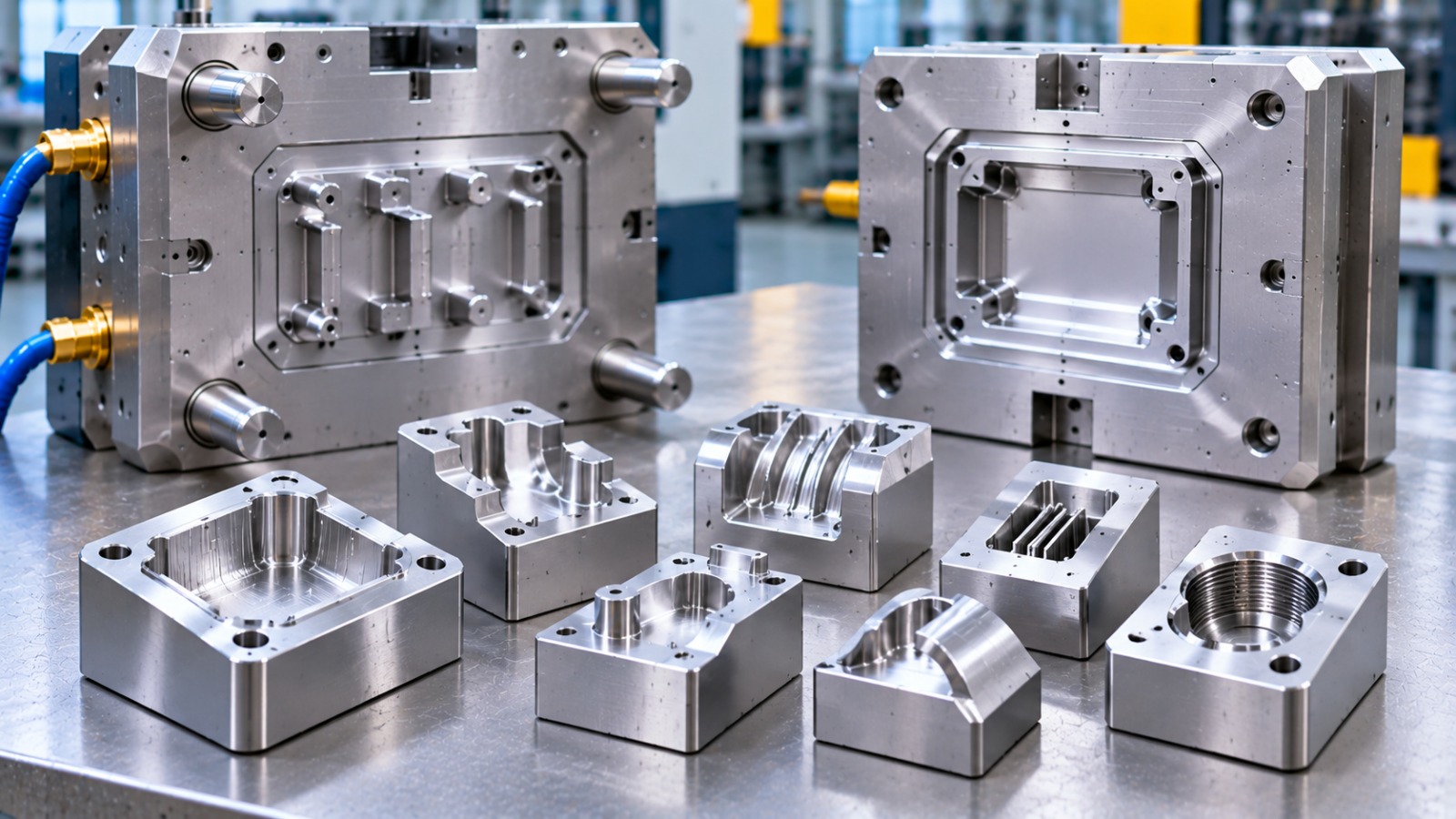
Mold inserts are important components used in injection mold manufacturing to create specific shapes, details, and features in plastic products. These precision-machined components fit inside the main mold assembly and help manufacturers produce complex geometries with improved accuracy and flexibility.
Instead of manufacturing an entirely new mold whenever a product design changes, manufacturers can replace or modify selected inserts. This approach can reduce tooling costs, simplify maintenance, and improve production efficiency.
In this guide, we explain what mold inserts are, their types, materials, manufacturing processes, and why they are important in injection molding.
What Are Mold Inserts?
Mold inserts are removable or replaceable components installed inside an injection mold. They help form specific sections of a plastic product, including holes, recesses, logos, textures, grooves, and complex geometrical features.
These components are typically manufactured from tool steel, stainless steel, or other suitable materials based on production requirements.
Mold inserts work together with the main mold core and cavity to create the required product shape. Their replaceable design also makes mold maintenance and modifications easier.
1. Types of Mold Inserts Used in Injection Molding
Different types of mold inserts perform specific functions depending on the product design and manufacturing requirements.
Core Inserts
Core inserts create internal features of plastic components. They can form holes, recesses, internal walls, and other detailed geometries.
Common applications:
Internal product features.
Mounting holes and recesses.
Hollow plastic components.
Complex internal geometries.
Cavity Inserts
Cavity inserts form specific external sections of a plastic product. They help create accurate outer dimensions, contours, and surface details.
Common applications:
External product surfaces.
Decorative features.
Product lettering and logos.
Detailed external geometries.
Interchangeable Inserts
Interchangeable inserts allow manufacturers to change selected mold features without replacing the entire mold.
They are particularly useful when producing different product variations using a common mold base.
Benefits include:
Easier product design modifications.
Reduced tooling replacement costs.
Flexible production requirements.
Simplified maintenance.
Thread Inserts
Thread inserts are designed to create internal or external threaded features in molded plastic components. Depending on the design, threads may be formed using unscrewing mechanisms, collapsible cores, or other suitable tooling arrangements.
Common applications:
Plastic caps and closures.
Threaded connectors.
Industrial plastic fittings.
Product fastening components.
Cooling Inserts
Cooling inserts help improve heat transfer in selected mold areas. They may incorporate dedicated cooling passages or special thermal designs to manage temperatures in difficult-to-cool regions.
Benefits include:
Improved local cooling.
Better temperature control.
Reduced cooling-related defects.
Potential improvements in molding cycle time.
2. Why Are Mold Inserts Important?
Mold inserts offer several advantages in injection mold manufacturing. They provide flexibility, simplify repairs, and support the production of complex plastic components.
Reduced Tooling Costs
Replacing a damaged insert can be more economical than replacing the complete mold. Manufacturers can also modify individual inserts when product requirements change.
Easier Mold Maintenance
Removable inserts make it easier to inspect, repair, polish, and replace specific mold sections.
Improved Design Flexibility
Manufacturers can use interchangeable inserts to produce different product variations with a shared mold structure.
Better Precision
CNC-machined inserts help create detailed product features with controlled dimensions and surface finishes.
Reduced Production Downtime
When a replaceable insert becomes damaged or worn, manufacturers may be able to replace only that component instead of repairing the entire mold.
3. Materials Used for Mold Inserts
Material selection directly affects insert durability, machinability, wear resistance, and performance during repeated molding cycles.
Common materials include:
Material | Key Characteristics | Typical Applications |
|---|---|---|
P20 Tool Steel | Good machinability and general-purpose tooling performance | General injection mold inserts |
H13 Tool Steel | Good hot hardness and thermal resistance | Demanding molding applications |
S136 Stainless Steel | Corrosion resistance and polishing capability | Molds requiring corrosion resistance |
420 Stainless Steel | Hardness and corrosion resistance after suitable heat treatment | Selected precision mold inserts |
Aluminium | Lightweight and easy to machine | Prototype and lower-volume tooling |
The right material depends on the plastic being molded, production volume, operating conditions, required surface finish, and expected mold life.
4. How Are Mold Inserts Manufactured?
Mold insert manufacturing involves several precision engineering operations. Each stage contributes to the final dimensions, geometry, and performance of the insert.
Step 1: CAD Design
Engineers create a 3D model of the insert based on product requirements and mold design specifications.
Step 2: Material Selection
A suitable material is selected according to required hardness, wear resistance, corrosion resistance, and production conditions.
Step 3: CNC Milling
CNC milling creates pockets, contours, slots, and other complex features in the insert.
Step 4: CNC Turning
CNC turning is used when the insert contains cylindrical features requiring accurate diameters and concentricity.
Step 5: EDM Machining
Electrical Discharge Machining (EDM) creates detailed geometries, narrow slots, and complex features that are difficult to produce using conventional cutting tools.
Step 6: Grinding and Finishing
Grinding improves dimensional accuracy and surface quality. Polishing or texturing may be performed depending on the required finish.
Step 7: Quality Inspection
The finished insert is inspected for dimensions, surface finish, hardness where specified, and compatibility with the mold assembly.
5. Important Design Considerations for Mold Inserts
Proper insert design helps improve mold performance and reduces manufacturing difficulties.
Manufacturers should consider the following factors:
Insert dimensions: Ensure the insert matches the required mold geometry.
Material compatibility: Select materials suitable for the molding application.
Wall thickness: Provide sufficient strength to withstand operating loads.
Cooling requirements: Consider heat removal in areas with high thermal loads.
Alignment: Ensure accurate positioning within the mold.
Retention: Use suitable fastening and locating features.
Maintenance access: Make inserts practical to remove and replace.
Surface finish: Specify the finish according to the final product requirements.
These considerations help create inserts that fit correctly and operate reliably.
6. Common Problems With Mold Inserts
Incorrect design, machining, installation, or maintenance can affect mold insert performance.
Common Problem | Possible Cause | Recommended Solution |
|---|---|---|
Insert wear | Repeated production cycles or unsuitable material | Select suitable wear-resistant material |
Dimensional inaccuracy | Machining or inspection errors | Perform accurate dimensional checks |
Insert misalignment | Incorrect positioning or damaged locating features | Inspect alignment and locating systems |
Corrosion | Moisture or unsuitable material selection | Use appropriate corrosion-resistant materials |
Cracking | Excessive stress or inadequate insert strength | Review material and structural design |
Poor surface finish | Improper machining or polishing | Apply suitable finishing operations |
Regular inspection and preventive maintenance can help reduce these problems.
7. Mold Inserts vs. Complete Mold Replacement
One of the major advantages of mold inserts is that they allow selected sections of a mold to be modified or replaced.
Comparison | Mold Inserts | Complete Mold Replacement |
|---|---|---|
Replacement scope | Selected mold components | Entire mold assembly |
Initial expense | Generally lower for localized changes | Generally higher |
Maintenance | Individual components can be serviced | Requires broader repair or replacement |
Design flexibility | Supports interchangeable features | May require a new mold design |
Production downtime | Can be lower depending on design | Can be significantly longer |
The actual cost and downtime depend on mold construction, insert accessibility, and the extent of the required modification.
8. Applications of Mold Inserts Across Industries
Mold inserts are used in various industries that manufacture plastic components with complex shapes and detailed features.
Automotive Industry
Used for dashboards, connectors, interior components, housings, and other plastic parts.
Electronics Industry
Used for electrical enclosures, connectors, switch housings, and precision plastic components.
Medical Equipment Manufacturing
Used in selected medical device housings, laboratory components, and precision plastic products.
Consumer Products
Used for household products, packaging components, appliance parts, and plastic accessories.
Industrial Manufacturing
Used for machine housings, technical components, fittings, and specialized plastic parts.
9. How CNC Machining Improves Mold Insert Manufacturing
CNC machining is essential for producing precision mold inserts with complex geometries and controlled dimensions.
Different machining methods support different manufacturing requirements:
CNC Milling: Creates pockets, slots, contours, and detailed surfaces.
CNC Turning: Produces cylindrical inserts and round features.
EDM: Creates intricate details and difficult-to-machine geometries.
Surface Grinding: Improves flatness and dimensional accuracy.
Precision Drilling: Creates mounting and cooling-related holes.
By selecting suitable machining processes and performing accurate inspections, manufacturers can improve insert quality and compatibility with the mold assembly.
Conclusion
Mold inserts are essential components in injection mold manufacturing because they provide flexibility, precision, and easier maintenance. They help manufacturers create complex product features, modify selected mold sections, and replace worn components without necessarily replacing the complete mold.
Selecting suitable materials, designing inserts correctly, and using precision CNC machining are important for achieving reliable performance. With proper manufacturing and maintenance, mold inserts can help improve tooling efficiency and control long-term production costs.
Frequently Asked Questions (FAQs)
1. What is a mold insert in injection molding?
A mold insert is a removable or replaceable component installed inside an injection mold. It creates specific product features such as holes, recesses, contours, and surface details.
2. What are the common types of mold inserts?
Common types include core inserts, cavity inserts, interchangeable inserts, thread-forming inserts, and cooling inserts.
3. Which materials are used to manufacture mold inserts?
Common materials include P20 tool steel, H13 tool steel, S136 stainless steel, 420 stainless steel, and aluminium.
4. Why are interchangeable mold inserts important?
Interchangeable inserts allow manufacturers to modify selected mold features or produce different product variations without replacing the entire mold.
5. How are injection mold inserts manufactured?
They are manufactured using processes such as CNC milling, CNC turning, EDM, drilling, surface grinding, and polishing.
6. Can damaged mold inserts be replaced?
Yes. Replaceable inserts can often be removed and replaced individually, provided the mold design supports this arrangement.
7. How do mold inserts reduce manufacturing costs?
They can reduce costs by allowing localized repairs, simplifying product modifications, and avoiding complete mold replacement when only a specific section needs attention.