
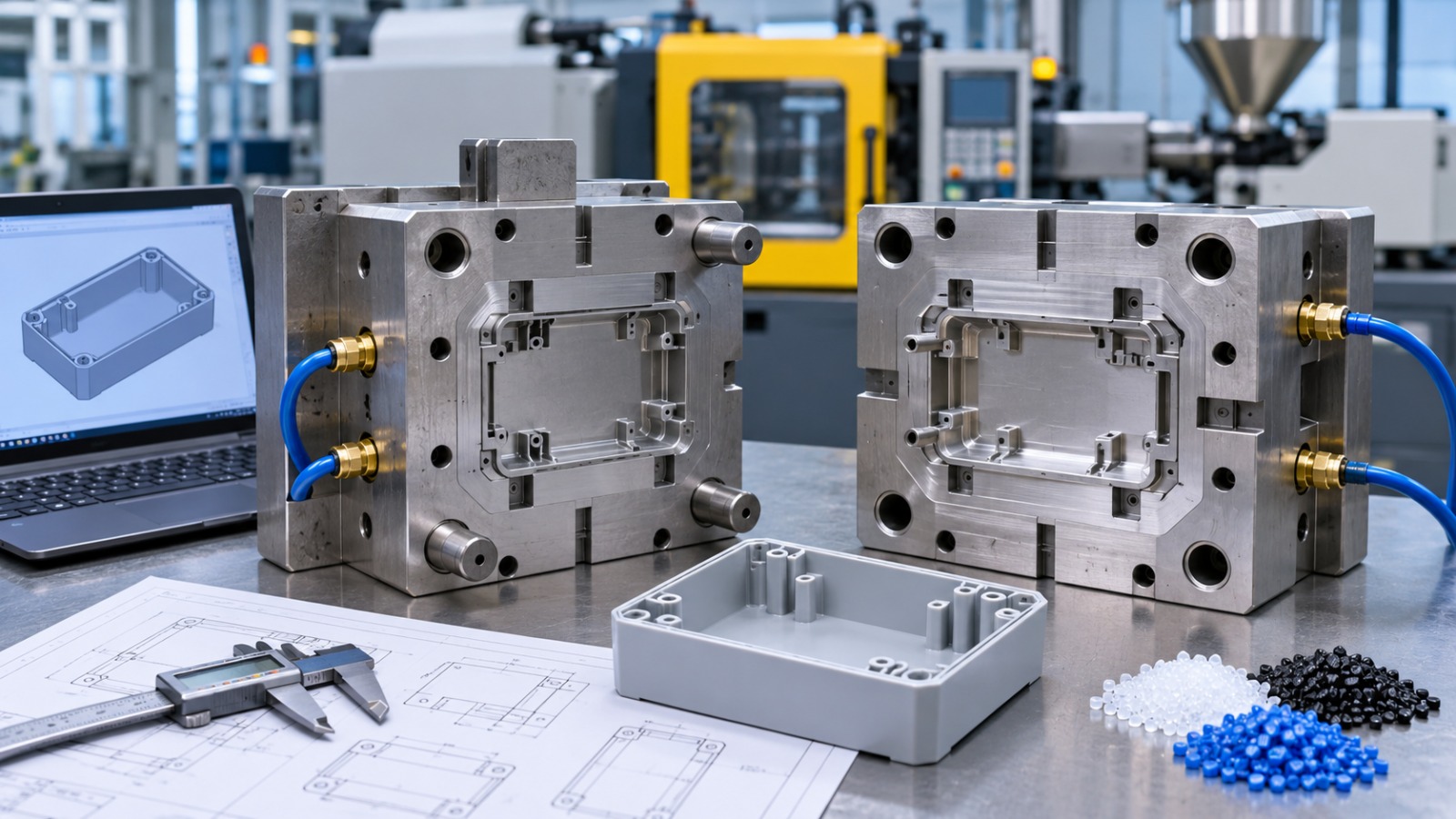
Injection Mold Design Considerations for Better Part Production
Injection molding is widely used to manufacture plastic components with consistent dimensions, detailed shapes, and repeatable quality. However, successful production depends on more than selecting the right molding machine or plastic material. Proper injection mold design plays an important role in improving part quality, reducing manufacturing defects, and maintaining efficient production cycles.
A well-designed injection mold helps manufacturers achieve better material flow, uniform cooling, easy part ejection, and consistent component dimensions. Therefore, engineers should evaluate several important design factors before starting mold manufacturing.
1. Select the Right Plastic Material
Material selection is one of the first considerations in injection mold design. Different plastics have different melting temperatures, shrinkage rates, flow characteristics, and mechanical properties.
Common injection molding materials include ABS, polypropylene (PP), polyethylene (PE), polycarbonate (PC), nylon, and PEEK. The selection depends on the component’s strength, flexibility, temperature resistance, chemical exposure, and intended application.
Understanding material properties also helps engineers determine suitable mold temperatures, injection pressure, cooling requirements, and shrinkage allowances.
2. Maintain Uniform Wall Thickness
Wall thickness directly affects material flow, cooling time, and final part quality. Uneven wall sections can cause defects such as sink marks, warping, internal stress, and incomplete filling.
Designers should maintain consistent wall thickness wherever possible. When thickness changes are necessary, gradual transitions can help reduce stress concentrations and improve material flow.
This approach supports more predictable cooling and helps produce dimensionally stable plastic components.
3. Include Proper Draft Angles
Draft angles are slight tapers added to vertical surfaces of molded components. They allow finished parts to release more easily from the mold during ejection.
Without sufficient draft, components may stick to the mold surface, develop scratches, or become damaged during removal.
The required draft angle depends on factors such as material type, wall depth, surface texture, and part geometry. Textured surfaces generally require additional draft compared with smooth surfaces.
4. Design an Efficient Gate and Runner System
The gate and runner system controls how molten plastic enters and travels through the mold cavity. A properly designed system helps distribute material evenly and reduces filling-related defects.
Gate location, size, and type should be selected according to the component’s geometry, wall thickness, and appearance requirements.
An inefficient gate design can lead to short shots, weld lines, air traps, and uneven filling. Therefore, engineers should evaluate material flow during the mold design stage.
5. Plan Effective Cooling Channels
Cooling is an important factor in injection molding cycle time and component quality. Cooling channels help control mold temperature and remove heat from the molten plastic after injection.
Poor cooling arrangements can cause uneven solidification, warping, dimensional variation, and longer production cycles.
Designers should position cooling channels to provide balanced heat removal throughout the mold. Simulation tools can also help identify potential temperature differences and improve cooling layouts before manufacturing.
6. Consider Part Ejection and Mold Structure
The ejection system removes the molded component after it has cooled sufficiently. Ejector pins, sleeves, and other suitable mechanisms should be positioned to release the part without damaging its surface or geometry.
At the same time, mold designers must consider the parting line, core and cavity arrangement, sliders, and lifters where required. These features help accommodate complex geometries and undercuts.
Careful planning improves mold functionality and supports smoother production operations.
7. Use Mold Flow Analysis Before Manufacturing
Mold flow analysis helps engineers evaluate how molten plastic behaves inside the mold cavity. It can identify potential problems involving filling, pressure, temperature, cooling, and material shrinkage.
By reviewing these factors before mold manufacturing, designers can make adjustments to gate positions, wall thickness, runner layouts, and cooling channels.
This early evaluation helps reduce design changes, minimise production risks, and improve the chances of achieving consistent molded parts.
Conclusion
Better injection molded parts begin with careful mold design. Material selection, uniform wall thickness, draft angles, gate placement, cooling channels, and ejection systems all influence final component quality and production efficiency.
By evaluating these design considerations early, manufacturers can reduce common molding defects, improve dimensional consistency, and create molds that support reliable production. Combining sound engineering principles with mold flow analysis also helps identify potential issues before manufacturing begins.