
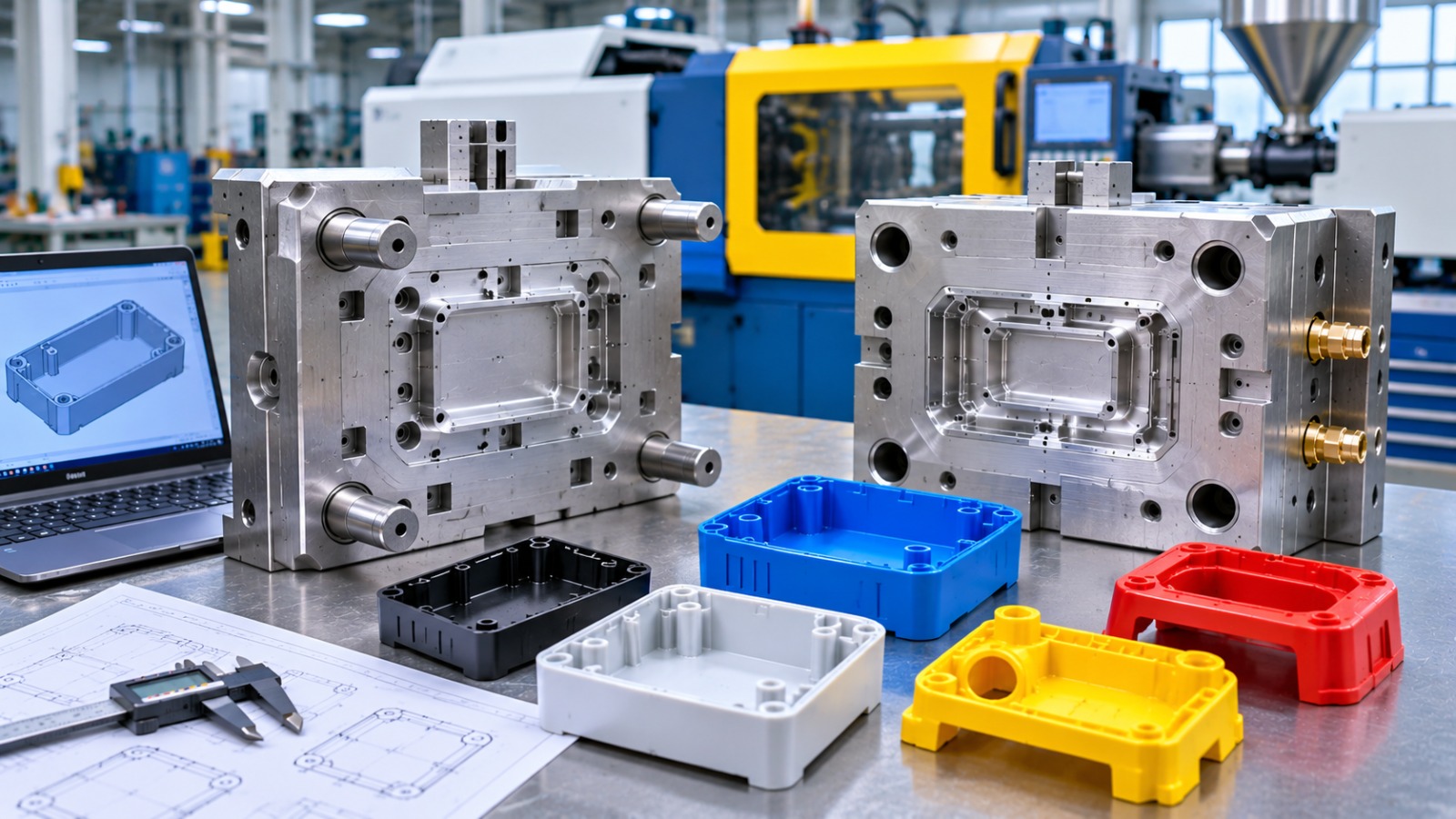
How Injection Molds Affect Plastic Part Quality
Injection molding is widely used to manufacture plastic components for automotive, electronics, medical equipment, industrial machinery, and consumer products. However, producing high-quality plastic parts depends on more than selecting the right material or injection molding machine. The design and manufacturing quality of the injection mold also play a major role in the final product.
An accurately manufactured injection mold helps maintain dimensional consistency, surface quality, structural strength, and repeatable production. In contrast, poor mold design or manufacturing defects can lead to sink marks, warping, flash, short shots, and other quality issues.
In this blog, we explore how injection molds affect plastic part quality and which mold design and manufacturing factors influence the final components.
1. Mold Design Determines Part Accuracy
Mold design directly influences the dimensions and geometry of the finished plastic component. The core and cavity must accurately represent the required product design.
Even small errors in mold dimensions can affect component fit, alignment, and assembly. Therefore, engineers must carefully review the CAD model, dimensional tolerances, wall thickness, and parting line before manufacturing the mold.
How it affects quality:
Maintains dimensional accuracy.
Supports consistent component geometry.
Reduces unwanted variations between parts.
Improves compatibility with other assembled components.
Accurate mold design provides a strong foundation for producing reliable plastic parts.
2. Surface Finish Depends on Mold Cavity Quality
The surface condition of the mold cavity directly influences the appearance of molded plastic components. Scratches, machining marks, polishing defects, and surface imperfections can transfer to the finished part.
Different products require different surface finishes depending on their appearance and functional requirements.
For example, consumer product housings may require smooth or textured surfaces, while industrial components may prioritise functional surface characteristics.
How it affects quality:
Improves product appearance.
Helps maintain consistent surface texture.
Reduces unwanted surface marks.
Supports specific finishing requirements.
Suitable machining, polishing, and surface treatment help achieve the required mold cavity finish.
3. Cooling Channel Design Influences Part Stability
Cooling is one of the most important factors in injection molding. After molten plastic enters the mold cavity, it must cool and solidify before the component can be ejected.
If cooling is uneven, different sections of the part may shrink at different rates. This can result in warping, dimensional changes, and internal stress.
How it affects quality:
Supports uniform cooling.
Reduces warping and deformation.
Helps maintain dimensional stability.
Supports efficient production cycles.
Proper cooling channel placement helps distribute temperature more evenly throughout the mold.
4. Gate and Runner Design Controls Material Flow
The gate and runner system controls how molten plastic enters and fills the mold cavity. Poor material distribution can create incomplete filling, weld lines, air traps, and inconsistent component quality.
Gate location should be selected according to the component geometry, wall thickness, material properties, and appearance requirements.
How it affects quality:
Supports uniform cavity filling.
Reduces short shots.
Helps control weld line locations.
Improves material distribution.
An effective runner and gate design helps maintain consistent filling conditions during production.
5. Venting Design Prevents Air-Related Defects
Air inside the mold cavity needs a suitable escape path as molten plastic enters. Without proper venting, trapped air can create defects such as burn marks, incomplete filling, and surface imperfections.
Mold designers should identify areas where air may become trapped and provide suitable venting arrangements.
How it affects quality:
Reduces air traps.
Helps prevent burn marks.
Supports complete cavity filling.
Improves surface appearance.
Proper venting is particularly important for complex component geometries and areas with restricted material flow.
6. Ejection System Protects Finished Components
Once the plastic material cools and solidifies, the ejection system removes the component from the mold. Poor ejection design can damage parts during removal.
Incorrect ejector pin positioning or insufficient draft angles may cause scratches, cracks, deformation, and unwanted marks.
How it affects quality:
Supports smooth part removal.
Reduces ejection-related damage.
Helps protect surface finishes.
Improves production consistency.
Engineers should position ejector pins carefully and consider suitable draft angles during mold design.
7. Mold Material Affects Durability and Production Consistency
The material used to manufacture an injection mold influences its strength, wear resistance, corrosion resistance, and expected service life.
Common mold materials include P20 tool steel, H13 tool steel, stainless steel, and aluminium. Each material has different properties and is suitable for specific manufacturing requirements.
Mold Material | Typical Characteristics |
|---|---|
P20 Tool Steel | General-purpose mold applications |
H13 Tool Steel | Heat resistance and durability |
Stainless Steel | Corrosion resistance |
Aluminium | Selected prototype and low-volume molds |
Selecting suitable mold material helps maintain cavity condition and dimensional performance throughout the intended production life.
8. CNC Machining Accuracy Influences Mold Quality
CNC machining plays an important role in manufacturing accurate mold components. CNC milling and turning help produce cavities, cores, inserts, and other precision features according to engineering drawings.
Machining errors can affect mold alignment, part dimensions, surface finish, and overall functionality.
How it affects quality:
Supports accurate cavity dimensions.
Improves core and cavity alignment.
Helps produce complex geometries.
Reduces dimensional inconsistencies.
Additional processes such as EDM and precision grinding may be used for detailed features and specific surface requirements.
9. Mold Maintenance Helps Maintain Consistent Part Quality
Even a well-designed mold can experience wear and performance changes after repeated production cycles. Dirt, material deposits, damaged surfaces, and worn components may affect the quality of molded parts.
Regular mold maintenance helps identify potential problems before they cause significant production defects.
Important maintenance activities include:
Cleaning mold cavities and surfaces.
Inspecting ejector pins and guide components.
Checking cooling channels.
Examining parting surfaces.
Monitoring cavity wear.
Replacing damaged components when required.
A suitable maintenance schedule helps preserve mold performance and supports consistent production quality.
How to Improve Plastic Part Quality Through Better Mold Manufacturing
Manufacturers can improve plastic component quality by evaluating important mold-related factors before production begins.
Review the CAD Design: Check component dimensions, wall thickness, draft angles, and complex features.
Select Suitable Mold Materials: Choose materials based on production quantity, plastic type, and durability requirements.
Optimise CNC Machining: Manufacture mold components according to the required dimensions and surface specifications.
Plan Cooling and Venting: Design suitable cooling channels and air escape paths.
Evaluate Material Flow: Review gate and runner arrangements to support complete cavity filling.
Test the Mold: Conduct trial production to evaluate dimensions, appearance, and ejection performance.
Maintain the Mold: Inspect and clean components regularly to preserve production consistency.
These steps help reduce potential defects and improve the reliability of injection molded components.
Conclusion
Injection molds have a direct influence on the quality, appearance, accuracy, and consistency of plastic parts. Factors such as mold design, cavity finish, cooling channels, gate placement, venting, ejection systems, and machining accuracy all contribute to the final result.
Therefore, manufacturers should consider mold quality from the early design stage through production and maintenance. Proper engineering, precision CNC machining, and suitable mold testing help reduce defects and support reliable plastic part manufacturing.
By focusing on these factors, businesses can improve component quality, minimise production issues, and achieve more consistent injection molding results.
Frequently Asked Questions
1. How does an injection mold affect plastic part quality?
An injection mold affects part dimensions, surface finish, material flow, cooling, and ejection. Accurate mold design and manufacturing help produce consistent plastic components.
2. Can poor mold design cause plastic part defects?
Yes. Poor mold design can contribute to sink marks, warping, short shots, flash, weld lines, air traps, and dimensional inaccuracies.
3. Why is cooling channel design important in injection molds?
Cooling channels help control mold temperature and remove heat from the plastic material. Proper cooling reduces uneven shrinkage, warping, and dimensional variation.
4. How does CNC machining improve injection mold quality?
CNC machining helps manufacture accurate mold cavities, cores, inserts, and other components. It supports dimensional accuracy, alignment, and the production of complex mold features.
5. Does mold surface finish affect the final plastic component?
Yes. The mold cavity surface can influence the appearance and texture of the molded component. Suitable machining and polishing help achieve the required finish.
6. How often should injection molds be maintained?
Maintenance frequency depends on mold design, material, production volume, and operating conditions. Regular inspection and cleaning help identify wear and prevent quality issues.