
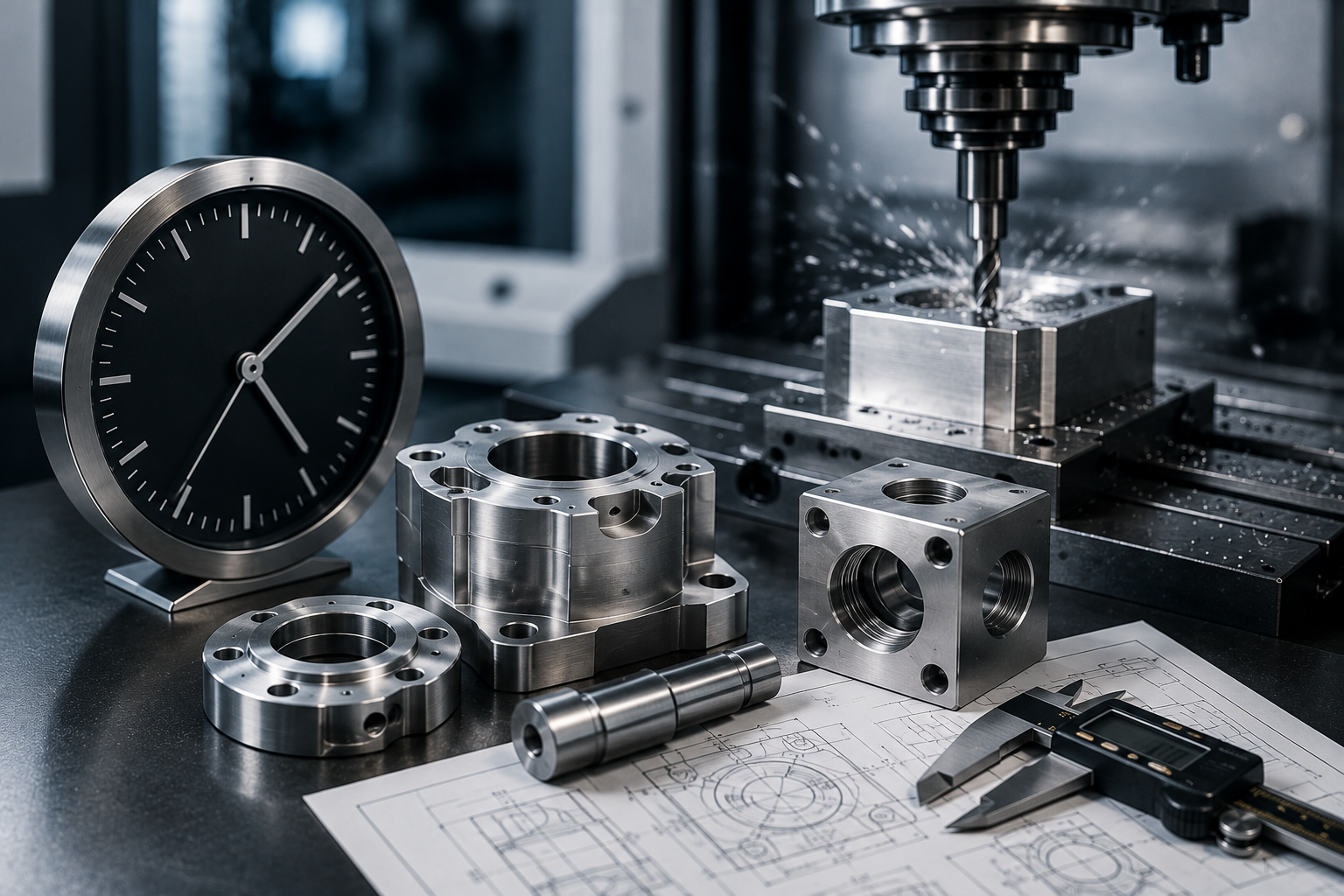
A Complete Guide for Manufacturers in Canada
When planning a manufacturing project, one of the most common questions businesses ask is, “How long does CNC machining take?” The answer depends on several factors, including part complexity, material selection, production quantity, machining processes, and finishing requirements.
At Polymach365, we specialize in precision CNC machining services in Canada, offering fast turnaround times without compromising quality. Whether you need a rapid prototype, custom-machined component, or high-volume production, understanding CNC machining lead times helps you plan production schedules more efficiently.
In this guide, we’ll explain what affects CNC machining lead times, typical production timelines, and practical ways to speed up your manufacturing process.
What Is CNC Machining Lead Time?
CNC machining lead time refers to the total time required to manufacture a part from the moment your CAD file is submitted until the finished components are delivered.
A typical CNC machining project includes:
- CAD File Review
- Design for Manufacturability (DFM) Analysis
- Material Procurement
- CNC Programming
- Machine Setup
- Precision Machining
- Quality Inspection
- Surface Finishing (if required)
- Packaging and Delivery
Because each project is unique, lead times can vary depending on complexity and production requirements.
Typical CNC Machining Lead Times
The following estimates provide a general guideline for CNC machining projects in Canada.
| Project Type | Typical Lead Time |
|---|---|
| Prototype Parts | 3–7 Business Days |
| Simple CNC Components | 5–10 Business Days |
| Medium Complexity Parts | 1–2 Weeks |
| Complex Precision Parts | 2–4 Weeks |
| Low-Volume Production | 2–5 Weeks |
| High-Volume Manufacturing | 4–8 Weeks |
These timelines may vary depending on material availability, machining complexity, and finishing requirements.
Factors That Affect CNC Machining Lead Times
Several important factors influence how quickly your parts can be manufactured.
1. Part Complexity
Simple parts require fewer machining operations and shorter setup times.
However, complex components often include:
- Deep pockets
- Thin walls
- Tight tolerances
- Complex contours
- Multi-sided machining
- Threaded features
Consequently, intricate designs require additional machining time and increase overall lead times.
2. Material Availability
Material selection significantly impacts delivery schedules.
Commonly Available Materials
- Aluminum
- Mild Steel
- Stainless Steel
- Brass
- ABS
- Nylon
- Delrin
Specialty Materials
- Titanium
- Inconel
- PEEK
- Tool Steel
Standard materials are usually available immediately, while specialty materials may require additional procurement time.
Therefore, choosing readily available materials can reduce overall production time.
3. CNC Machine Type
The type of CNC equipment required also affects production schedules.
CNC Milling
Suitable for flat surfaces and complex geometries.
CNC Turning
Ideal for cylindrical components such as shafts and bushings.
5-Axis CNC Machining
Although programming is more advanced, 5-axis machining often completes complex parts faster because multiple operations are performed in a single setup.
As a result, overall lead times may actually decrease.
4. Production Quantity
Quantity plays a major role in manufacturing schedules.
Prototype Manufacturing
Fast production with minimal setup.
Low-Volume Production
Requires additional machining time but maintains quick turnaround.
Production Manufacturing
Larger orders naturally require more machining hours, although automation improves efficiency.
Consequently, production volume directly influences lead time.
5. Surface Finishing
Many parts require secondary finishing operations after machining.
Common finishing services include:
- Anodizing
- Powder Coating
- Sand Blasting
- Bead Blasting
- Polishing
- Passivation
- Painting
Although these finishes improve appearance and durability, they also extend production schedules.
6. Quality Inspection
Every precision component undergoes detailed dimensional inspection before shipment.
Inspection may include:
- CMM Measurement
- Digital Caliper Verification
- Surface Finish Inspection
- Visual Quality Checks
- Functional Testing
Therefore, quality assurance ensures accuracy while slightly increasing lead times.
Typical CNC Machining Process Timeline
At Polymach365, we follow an efficient manufacturing workflow.
Step 1 – Upload Your CAD File
Submit your 3D model securely.
Time: Same Day
Step 2 – Engineering Review
Our engineers perform Design for Manufacturability (DFM) analysis and prepare your quotation.
Time: 1–2 Business Days
Step 3 – CNC Programming
Machining programs are created and optimized for production.
Time: 1 Business Day
Step 4 – Precision Machining
Advanced CNC milling, turning, or 5-axis machining begins.
Time: 2–10 Business Days
Step 5 – Quality Inspection
Every component is inspected for dimensional accuracy and quality.
Time: 1 Business Day
Step 6 – Shipping
Finished components are packaged and shipped across Canada.
Time: 1–5 Business Days
Because our workflow is streamlined, customers receive high-quality parts quickly and reliably.
How to Reduce CNC Machining Lead Times
Fortunately, there are several ways to speed up production.
Optimize Your CAD Design
Simple geometries reduce machining time.
Avoid unnecessary pockets, sharp corners, and overly tight tolerances whenever possible.
Use Standard Materials
Common materials such as aluminum and stainless steel are readily available.
Therefore, material sourcing delays are minimized.
Order Multiple Parts Together
Batch manufacturing improves efficiency and reduces setup time.
Consequently, larger orders often achieve better delivery schedules.
Request DFM Feedback
Our engineering team reviews every design before production.
As a result, we identify design improvements that reduce machining time and manufacturing costs.
Plan Ahead
Submitting production requirements early helps reserve machine capacity and avoid scheduling delays.
Why Choose Polymach365 for Fast CNC Machining in Canada?
Polymach365 combines advanced CNC technology, experienced engineers, and efficient production planning to deliver industry-leading turnaround times.
Our Services Include
✔ CNC Milling Services
✔ CNC Turning Services
✔ 5-Axis CNC Machining
✔ Rapid Prototyping
✔ Low-Volume Production
✔ Production Manufacturing
✔ Injection Mold Components
✔ Engineering Support
✔ Quality Inspection
✔ Fast Delivery Across Canada
Moreover, we maintain strict quality standards while meeting demanding production deadlines.
Industries We Serve
Our CNC machining services support manufacturers across numerous industries.
- Automotive
- Aerospace
- Medical Devices
- Industrial Equipment
- Robotics
- Electronics
- Energy
- Consumer Products
- Mold Manufacturing
Therefore, businesses across Canada rely on Polymach365 for dependable CNC manufacturing solutions.
Why Manufacturers Trust Polymach365
Our Advantages
✔ Fast CNC Machining Lead Times
✔ Precision Manufacturing
✔ Competitive Pricing
✔ Advanced CNC Equipment
✔ Skilled Engineering Team
✔ Quality Assurance
✔ Flexible Production Volumes
✔ Reliable Nationwide Delivery
✔ Excellent Customer Support
As a result, manufacturers choose Polymach365 for projects that require speed, precision, and reliability.
Final Thoughts
The time required for CNC machining depends on your part design, material selection, production quantity, machining complexity, and finishing requirements. However, choosing an experienced manufacturing partner can significantly reduce lead times while maintaining exceptional quality.
At Polymach365, we use advanced CNC machining technology, streamlined workflows, and expert engineering support to deliver high-quality parts quickly and efficiently.
Whether you need rapid prototypes or full-scale production, we are committed to helping you meet your manufacturing deadlines.
Request Your CNC Machining Quote Today
Upload your CAD files today and receive a fast quotation with expert DFM feedback. Let Polymach365 help you reduce lead times, improve production efficiency, and deliver precision-machined components on schedule.