When Is CNC Lathe Machining the Best Choice for Your Component?
Choosing the right manufacturing process is essential for producing accurate, durable, and cost-effective components. For parts with cylindrical shapes, circular features, or rotational symmetry, CNC lathe machining can be an effective manufacturing solution. It helps manufacturers produce components with consistent dimensions, smooth surfaces, and repeatable results.
CNC lathe machining is widely used in industries such as automotive manufacturing, industrial machinery, robotics, and engineering. However, it is not the ideal option for every component. The best process depends on the part’s geometry, material, tolerances, production quantity, and intended application.
In this guide, we explain when CNC lathe machining is the best choice, which components benefit most from this process, and how to determine whether it suits your manufacturing requirements.
What Is CNC Lathe Machining?
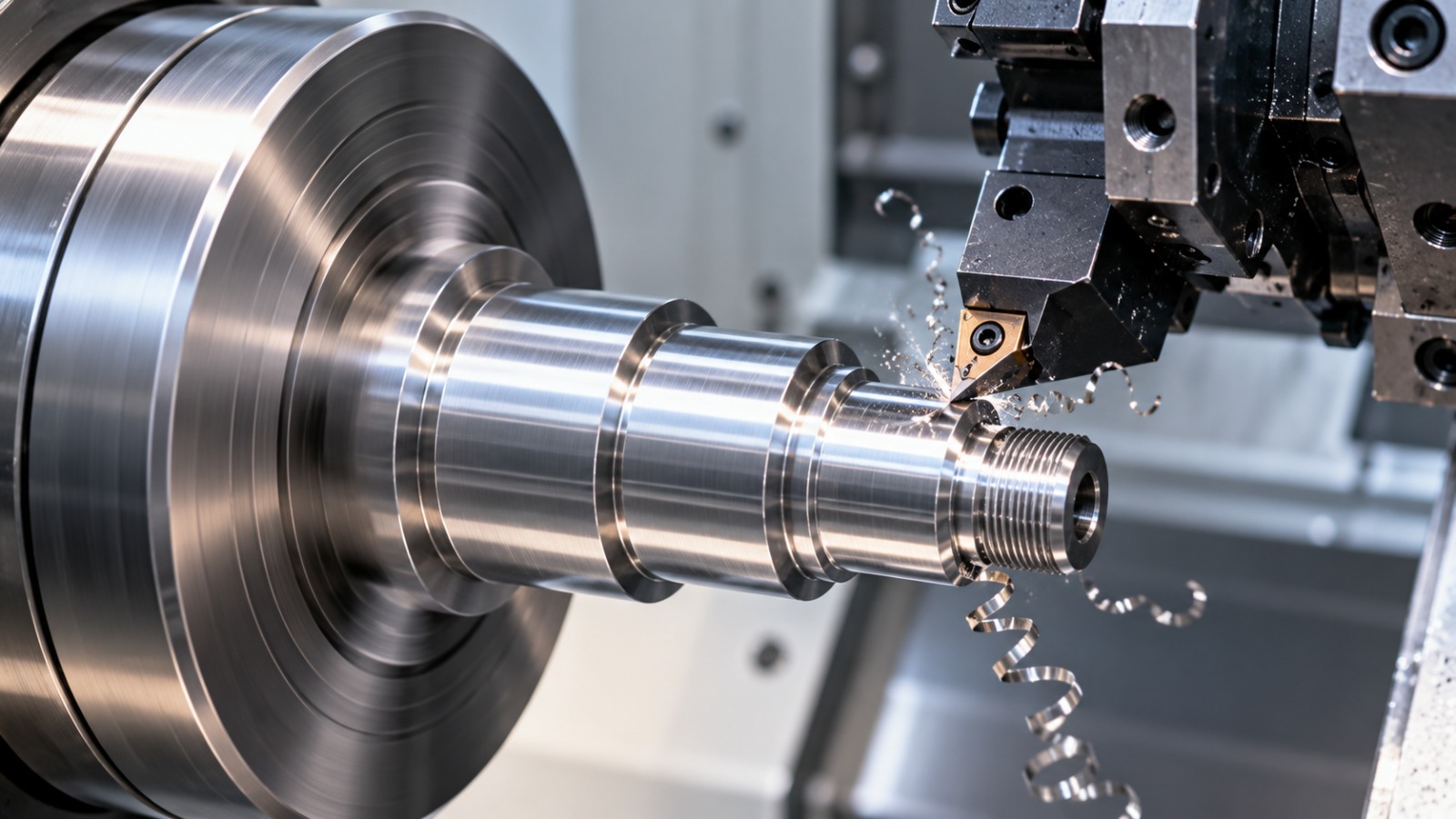
CNC lathe machining is a manufacturing process that uses computer-controlled equipment to shape a rotating workpiece. A cutting tool removes material from the workpiece to achieve the required dimensions, profile, and surface finish.
CNC stands for Computer Numerical Control. The machine follows programmed instructions to control cutting movements and machining operations.
Unlike CNC milling, where a rotating cutting tool removes material from a typically stationary workpiece, conventional CNC turning rotates the workpiece while a cutting tool moves along its surface.
Depending on the machine and setup, CNC lathe machining can produce external diameters, internal bores, grooves, tapers, threads, and other rotational features.
This process is particularly useful when a component requires accurate cylindrical geometry and consistent production quality.
When Is CNC Lathe Machining the Best Choice?
CNC lathe machining is most suitable when the component’s shape and manufacturing requirements align with turning operations.
1. When Your Component Has a Cylindrical Shape
CNC lathe machining is an excellent option for components with round or rotationally symmetrical features.
During machining, the workpiece rotates while the cutting tool removes material to create the required shape. This makes the process efficient for producing cylindrical parts with different diameters and profiles.
Common examples include:
Shafts and axles
Pins and rods
Bushings and spacers
Cylindrical housings
Rollers and sleeves
If your component mainly consists of circular profiles, CNC turning may be more suitable than milling alone.
2. When You Need Accurate Dimensions
Some mechanical components must fit precisely into assemblies or operate with other moving parts. In these situations, dimensional accuracy is especially important.
CNC lathe machining follows programmed cutting paths to produce specified diameters, lengths, grooves, and other features. With appropriate equipment, tooling, and process control, manufacturers can achieve tight tolerances when required.
For example, a shaft may need to fit inside a bearing with a specified clearance. Accurate turning helps manufacture the shaft according to the required dimensions.
However, achievable tolerances depend on the material, component geometry, machine condition, cutting strategy, and inspection requirements.
3. When You Need Consistent Parts in Multiple Production Runs
Manufacturers often require identical components for assembly lines, machinery, or replacement part inventories.
CNC lathe machining allows a validated program to be reused for subsequent production runs. As a result, it supports repeatability and helps maintain consistency across batches.
This is particularly useful for businesses manufacturing shafts, threaded components, bushings, and other parts that must follow the same specifications.
Suitable inspection procedures are still necessary to verify that the finished components meet the required standards.
4. When Your Design Includes Threads or Grooves
Many mechanical components require external threads, internal threads, grooves, or other detailed rotational features.
Depending on the machine’s capabilities, CNC lathe machining can produce these features as part of the turning process. This can reduce the need for separate operations and additional setups.
Typical applications include threaded connectors, fasteners, fittings, retaining grooves, and specialized mechanical components.
Before manufacturing begins, clearly specify thread standards, dimensions, tolerances, and any finishing requirements.
5. When You Need Smooth Cylindrical Surfaces
Surface finish can affect friction, wear, sealing performance, and the fit between assembled components.
CNC turning can produce controlled surface finishes on cylindrical parts. The final result depends on the cutting tool, feed rate, material, machine condition, and machining strategy.
For components requiring particularly smooth surfaces, additional finishing operations may be necessary.
Therefore, identify critical surface finish requirements during the design and quotation stages.
6. When You Need Custom Components in Small or Medium Quantities
CNC lathe machining can be suitable for prototypes, customized parts, replacement components, and production batches.
Because the process uses programmed instructions, manufacturers can modify the design and machining program when project requirements change. This flexibility can be valuable during product development.
However, setup and programming costs still apply. For larger quantities, it is worth comparing the total production cost of CNC turning with other manufacturing methods.
Which Components Are Best Suited to CNC Lathe Machining?
Several component types are particularly suitable for CNC turning.
Shafts and Axles
Shafts and axles often require precise diameters, shoulders, grooves, and rotational profiles. CNC lathe machining can produce these features according to specified dimensions.
These components are commonly used in machinery, automotive systems, and mechanical assemblies.
Bushings and Spacers
Bushings and spacers help maintain alignment, manage clearances, or support moving components. CNC turning is suitable for producing their external cylindrical surfaces and, where required, internal bores.
Pins and Fastener Components
Pins, threaded studs, and specialized fastener components may require consistent diameters, lengths, and thread features.
CNC lathe machining can manufacture these parts when their geometry and production requirements suit turning operations.
Rollers and Cylindrical Housings
Rollers and cylindrical housings may require specific diameters, lengths, and surface finishes. CNC turning can produce these features for industrial machinery and other equipment.
Custom Mechanical Components
Some projects require parts with unique rotational profiles or application-specific dimensions. CNC lathe machining can support custom component production based on technical drawings and approved specifications.
Which Materials Can Be Used for CNC Lathe Machining?
CNC lathe machining supports a range of materials. The appropriate choice depends on the component’s strength, weight, corrosion resistance, operating environment, and intended function.
Aluminum: Aluminum is lightweight and generally easy to machine. It is commonly used for shafts, sleeves, housings, and other components where weight matters.
Stainless Steel: Stainless steel offers corrosion resistance and is suitable for many industrial and mechanical applications. Machining conditions depend on the specific grade.
Carbon Steel: Carbon steel is used for various shafts, pins, and mechanical components that require suitable strength and durability.
Brass: Brass is often selected for fittings, connectors, and precision components where its machinability and other material properties are beneficial.
Copper: Copper may be used for specialized components that require electrical or thermal conductivity, although its machining characteristics must be considered.
Titanium: Titanium can be suitable for applications requiring a high strength-to-weight ratio. However, it may require specialized cutting tools and machining strategies.
Engineering Plastics: Certain plastics can be turned to produce lightweight components, bushings, sleeves, and other parts, depending on the material’s properties and application.
Always confirm the material grade and any relevant material certifications before production, particularly for components used in demanding or regulated applications.
CNC Lathe Machining vs. CNC Milling: Which Should You Choose?
CNC lathe machining and CNC milling serve different manufacturing needs. The right choice depends mainly on the geometry and features of your component.
| Feature | CNC Lathe Machining | CNC Milling |
|---|---|---|
| Primary operation | Rotates the workpiece against a cutting tool | Uses rotating cutting tools on a workpiece |
| Best suited for | Cylindrical and rotational parts | Prismatic parts, pockets, slots, and complex surfaces |
| Common components | Shafts, bushings, pins, sleeves | Brackets, plates, housings, mounting blocks |
| Typical features | Diameters, grooves, threads, tapers | Flat surfaces, pockets, holes, contours |
| Design suitability | Parts dominated by rotational geometry | Parts with multiple non-rotational features |
Some components require both turning and milling. For example, a shaft may need accurately turned diameters as well as milled flats or cross-holes.
In such cases, a combined machining approach or a suitable mill-turn machine may help reduce additional setups. The most appropriate option depends on the component’s complexity and production requirements.
What Are the Main Benefits of CNC Lathe Machining?
CNC lathe machining offers several advantages for suitable components.
Precision and Repeatability
Computer-controlled machining supports consistent dimensions across production runs when the process is properly set up and monitored.
Efficient Material Removal
Turning can efficiently remove material from cylindrical workpieces, particularly when producing shafts, sleeves, and similar components.
Design Flexibility
Manufacturers can adjust machining programs to accommodate approved design changes without necessarily requiring dedicated molds or dies.
Multiple Turning Operations
Depending on machine capabilities, a single setup may accommodate several operations, such as facing, turning, grooving, and threading.
Support for Different Production Quantities
CNC turning can support prototype development, custom orders, and suitable production batches.
Reduced Manual Intervention
Programmed machining can reduce the need for continuous manual tool movement. Nevertheless, proper setup, supervision, tool maintenance, and quality inspection remain important.
When Is CNC Lathe Machining Not the Best Choice?
Although CNC turning is effective for rotational components, it may not be the most practical option for every design.
Components With Mostly Flat or Complex Non-Rotational Features
Parts such as mounting plates, brackets, and rectangular housings may be better suited to CNC milling or another manufacturing process.
Parts Requiring Extensive Features Across Multiple Faces
A component with numerous angled surfaces, pockets, and cross-features may need milling, multi-axis machining, or a combination of processes.
Very High Production Volumes
For very large quantities, dedicated production equipment or alternative manufacturing methods may offer a lower cost per part. The decision depends on tooling investment, component design, material, and expected demand.
Components Requiring Minimal Material Removal
If the component can be produced more efficiently through forming, casting, fabrication, or another process, machining the entire shape from solid stock may be unnecessary.
Therefore, evaluate the component’s geometry, production quantity, and functional requirements before selecting CNC lathe machining.
How Do You Determine Whether Your Component Needs CNC Lathe Machining?
Before choosing a manufacturing process, review the following factors.
Component geometry: Determine whether the part is primarily cylindrical or rotationally symmetrical.
Dimensional tolerances: Identify the critical diameters, lengths, bores, and fits.
Material requirements: Select a material that meets the component’s mechanical and environmental needs.
Surface finish: Define any requirements for smoothness, sealing, friction, or appearance.
Production quantity: Establish whether you need a prototype, a small batch, or repeated production.
Secondary features: Identify any cross-holes, flats, pockets, or other features that may require milling.
Inspection requirements: Specify the measurements, reports, or certifications required for acceptance.
Budget and timeline: Compare setup costs, machining time, finishing, and delivery requirements.
These details help a manufacturing provider determine whether CNC turning alone is sufficient or whether a combined machining process would be more appropriate.
What Information Should You Provide When Requesting a CNC Turning Quote?
Providing clear technical information helps a machining provider assess your component and prepare a relevant quotation.
Include the following details wherever possible:
CAD files or dimensioned technical drawings
Required material and grade
Component dimensions and critical tolerances
Production quantity
Thread specifications, if applicable
Surface finish and coating requirements
Inspection and certification requirements
Delivery destination and target timeline
If your design is still under development, explain which specifications are final and which can be adjusted. This allows potential manufacturing options to be evaluated before production begins.
Frequently Asked Questions About CNC Lathe Machining
What is CNC lathe machining best used for?
CNC lathe machining is best suited for cylindrical and rotational components, including shafts, pins, bushings, spacers, sleeves, and threaded parts. It can also produce grooves, tapers, and internal bores when the machine and setup support those operations.
Is CNC lathe machining suitable for small batch production?
Yes. CNC lathe machining can produce prototypes and limited batches of custom components. Its suitability depends on setup costs, part complexity, material, required tolerances, and production quantity.
Can CNC lathe machining produce threaded components?
Yes. Many CNC lathes can produce external and internal threads, depending on their capabilities and tooling. The required thread dimensions, standards, and tolerances should be specified in the technical drawing.
Which materials are commonly used for CNC turning?
Common materials include aluminum, stainless steel, carbon steel, brass, copper, titanium, and suitable engineering plastics. The best material depends on the component’s operating conditions and performance requirements.
Is CNC turning more accurate than CNC milling?
Neither process is universally more accurate. Both can produce precise components when suitable equipment, tooling, and process controls are used. CNC turning is particularly suited to cylindrical features, while milling is often better for flat surfaces and complex non-rotational geometries.
Can CNC lathe machining produce complex components?
Yes, within the capabilities of the machine and setup. Advanced CNC lathes and mill-turn machines can produce components with multiple features. Parts requiring extensive non-rotational geometry may also need milling or multi-axis machining.
What is the difference between CNC turning and manual lathe machining?
CNC turning uses computer-controlled programs to guide cutting movements, while manual lathe machining relies more heavily on operator-controlled movements. CNC turning is particularly useful for repeatable production and complex programmed operations.
How do I know if my part requires CNC turning or milling?
Review the component’s geometry. If the part mainly features cylindrical surfaces and rotational symmetry, CNC turning may be appropriate. If it requires extensive flat surfaces, pockets, slots, or complex non-rotational features, CNC milling may be more suitable. Some parts require both processes.
Conclusion
CNC lathe machining is an effective manufacturing choice when your component requires cylindrical geometry, accurate diameters, rotational features, or consistent production across multiple parts. It is commonly used for shafts, bushings, pins, sleeves, threaded components, and other mechanical parts.
However, the best manufacturing process depends on the component’s design, material, tolerances, quantity, and finishing requirements. Reviewing these factors early can help you select a suitable machining method and avoid unnecessary production costs.
Polymach365 supports businesses exploring CNC machining solutions for custom metal components, prototypes, and production requirements. If you need CNC-turned components, prepare your technical drawings, material specifications, quantities, and critical tolerances to help evaluate the most suitable manufacturing approach.
Contact Polymach365 to discuss your component requirements and explore suitable CNC machining options.